
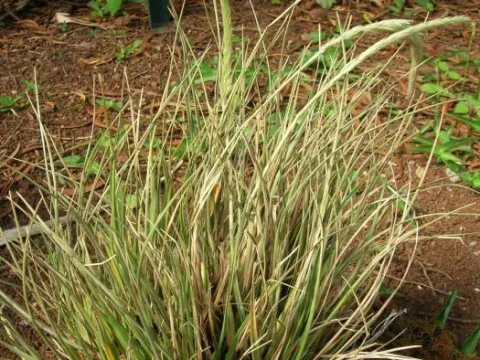
Trisetum
Trisetum Pers.
Trisetum is typically sown in early spring when the soil retains sufficient moisture for uniform seed germination. In regions with temperate climates, late autumn sowing is also practiced to achieve earlier emergence in the following spring.
What the section contains

Trisetum
For establishing a productive sward, seeds are sown in rows. The optimal seeding depth is 1–2 cm, as the seeds of this grass species are small and require shallow placement to ensure successful rooting.
When incorporating Trisetum into forage mixtures, seeding rates are adjusted based on the biological characteristics of companion species. Generally, 10–15 kg of seeds per hectare is sufficient for pure stands.
Post-sowing, it is highly recommended to roll the soil with ring-roller equipment. This improves seed-to-soil contact and accelerates moisture uptake, which is critical for achieving high-quality seedling emergence.
Weed control at the first true leaf stage is a vital operation, as Trisetum seedlings can easily be outcompeted by fast-growing weeds during the early stages of establishment.
Trisetum belongs to the Poaceae family and is a perennial plant that thrives in moderately moist, well-drained soils. It exhibits significant plasticity, allowing it to adapt to various soil textures, including loams.
The crop is highly winter-hardy and capable of enduring late spring frosts. This makes it a suitable choice for northern and mountainous regions where other grass species might suffer from winter damage.
As a light-loving plant, Trisetum forms the most productive stands on open, sun-exposed areas. In shaded conditions, stems become elongated, and overall biomass production is significantly reduced.
The optimal soil pH for Trisetum ranges from slightly acidic to neutral (pH 5.5–7.0). Excessive soil acidity leads to stand degradation, necessitating the application of lime to restore soil balance.
Normal development requires moderate nitrogen fertilization, especially during the tillering and jointing phases. Supplemental phosphorus and potassium contribute to stronger root systems and improved overall crop resilience.
The productivity of Trisetum depends heavily on regional moisture levels and the quality of agronomic practices. Under favorable conditions, the crop can yield up to two full cuts per season.
The average green mass yield ranges from 15 to 25 tonnes per hectare, with hay production varying between 4 and 7 tonnes per hectare, depending on soil fertility and mineral application.
Maximum nutritional value of the green biomass is achieved at the beginning of the heading phase. Post-flowering, forage quality begins to decline due to the accumulation of lignin in the stems and a decrease in protein content.
Utilizing the crop in hay-pasture mixtures allows for an extended grazing period, providing livestock with high-quality fodder until late autumn.
Maintaining proper mowing height is essential for sustaining long-term yields. Cutting too low can weaken the stand and cause plant loss within the community in subsequent years.
Trisetum is susceptible to common grass diseases, including various types of rust and powdery mildew. These pathogens thrive particularly well during periods of high humidity and persistent fog.
Among pests, cereal flies and wireworms pose the greatest threat, as they cause damage to the underground parts of the plants. Population monitoring should begin as soon as the seedlings emerge.
An effective disease management strategy includes crop rotation and avoiding soil compaction. If infection levels become critical, systemic fungicides should be applied according to local regulations.
Pest damage often correlates with general crop weakness due to nutrient deficiencies. Therefore, balanced mineral nutrition serves as the best preventative measure against insect infestation.
In cases where pest outbreaks are detected, spot-treatment or edge-spraying with insecticides is necessary to limit the spread of the infestation throughout the field.
The optimal time for harvesting hay is during the jointing or early heading phase. At this stage, the plant contains the highest concentration of protein, sugars, and biologically active compounds.
Mowing is performed using mower-conditioners, which accelerate the wilting process in the swaths and help preserve the nutritional properties of the plant's green tissues.
When preparing hay, it is crucial to ensure the biomass dries uniformly to a moisture content of 15–17%, preventing self-heating in bales or stacks and the growth of mold during storage.
If the cultivation goal is seed production, harvesting should take place at the wax-ripe stage. Trisetum seeds require careful threshing to minimize losses due to their small size and light weight.
After seed harvesting, the remaining crop residues can be used for silage or bedding material, allowing for the rational utilization of the total biomass produced on the field.