
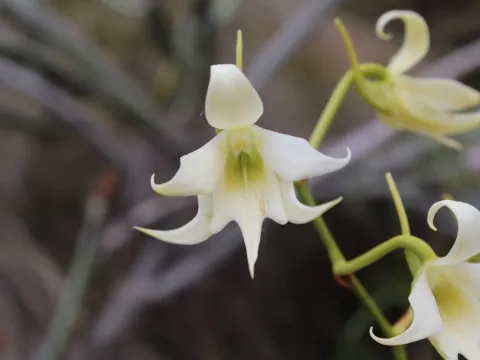
Sobennikoffia
Sobennikoffia
Sobennikoffia is a genus of perennial epiphytic orchids native to Madagascar, belonging to the Orchidaceae family. While not a conventional agricultural crop, it represents a significant segment in the specialty horticultural industry, highly valued by collectors and botanists for its unique morphological features.
What the section contains


Sobennikoffia
The plant has evolved as an epiphyte, anchoring itself to the bark of trees in tropical forests. This specific lifestyle necessitates a highly specialized agricultural approach, focusing on mimicking natural humidity levels and providing adequate airflow to the root system, which is aerial in nature.
Botanically, the plant features monopodial growth with leathery leaves and long-lasting, star-shaped flowers typical of the Angraecinae subtribe. The roots are designed to absorb moisture and dissolved nutrients directly from the ambient air, making them extremely sensitive to water quality and substrate composition.
In cultivation, Sobennikoffia requires a tropical microclimate with a constant relative humidity of at least 70%. High light intensity is crucial for photosynthesis; however, the light must be diffused to prevent leaf scorch, which is common in artificial greenhouse settings if shading systems are poorly managed.
Propagation is primarily handled through laboratory tissue culture (in vitro) methods. Because natural seed germination relies on specific mycorrhizal fungi associations in the wild, manual propagation is rarely successful for non-professional growers, cementing its status as an elite plant for specialized nurseries.
The plant requires a high-quality substrate consisting of tree bark, charcoal, and perlite to ensure rapid drainage. Any stagnation of water around the root collar can lead to rapid decay, which is the most frequent cause of mortality in professional collections.
Temperature management requires a daytime average of 22-26 degrees Celsius. Providing a consistent diurnal temperature fluctuation is essential to encourage flowering cycles and strengthen the plant's overall resilience against environmental stress factors.
The main threat is the development of various fungal pathogens resulting from insufficient ventilation. Stagnant air combined with high humidity creates an ideal environment for diseases that quickly degrade the plant's succulent leaves.
In terms of pests, scale insects and spider mites are the most persistent threats. Integrated pest management, including regular scouting and the use of targeted systemic insecticides, is necessary to maintain plant health and prevent the spread of infestations throughout the greenhouse facility.