
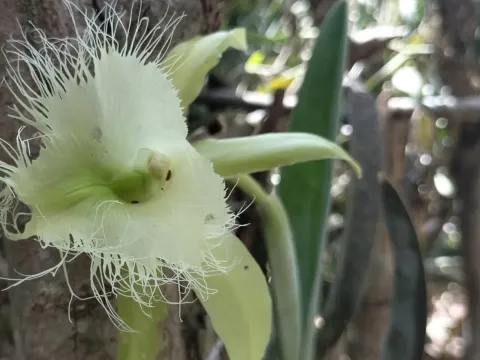
Rhyncholaelia
Rhyncholaelia
Rhyncholaelia is a genus of epiphytic orchids within the Orchidaceae family, native to the tropical regions of Central America. These orchids naturally thrive in the canopy layer, which dictates their specific requirement for high air circulation and specialized root environments.
What the section contains


Rhyncholaelia
Successful cultivation depends on providing bright, filtered light. While these plants enjoy significant light intensity to promote blooming, direct sunlight can easily burn their thick, succulent leaves, necessitating the use of light curtains or filtered glass setups.
Temperature control is essential; these orchids prefer moderate conditions but require a distinct diurnal temperature fluctuation to trigger flowering cycles. Maintaining a cooler night environment during the winter dormancy period is crucial for the plant's long-term health.
The potting medium must be extremely coarse to prevent waterlogging and facilitate rapid drying of the roots. Orchid bark, perlite, and charcoal are standard components that provide the necessary aeration and moisture-holding balance for this genus.
Watering should be rhythmic, allowing the substrate to approach complete dryness before the next irrigation event. Furthermore, humidity levels should ideally be maintained between 60 and 70 percent, which often requires the use of humidifiers or humidity trays in domestic settings.
Scale insects are a primary threat, as they attach themselves to the undersides of leaves and along the pseudobulbs, draining nutrients. Manual removal combined with systemic insecticide treatments is the most effective way to manage a scale infestation.
Mealybugs can become problematic in sheltered areas of the orchid, particularly at the base of the leaves. Regular inspection and spot-treatment with diluted neem oil or horticultural soap help prevent large colonies from establishing themselves.
Root rot, driven by stagnant moisture and poor aeration, is the most common cause of plant decline. If rot is suspected, the plant should be repotted immediately in fresh, sterile medium after trimming away the necrotic root sections with sterilized shears.
Fungal leaf spot diseases can develop in conditions where airflow is insufficient and foliage remains wet for extended periods. Improving ventilation and avoiding overhead watering are the primary methods of preventing these unsightly and potentially damaging infections.
Viral infections, such as Cymbidium mosaic virus, cause systemic distortions and chlorotic patterns on the leaves. Since these diseases cannot be cured, prevention through strict hygiene, such as disinfecting cutting tools between every use, is essential for the entire collection.