
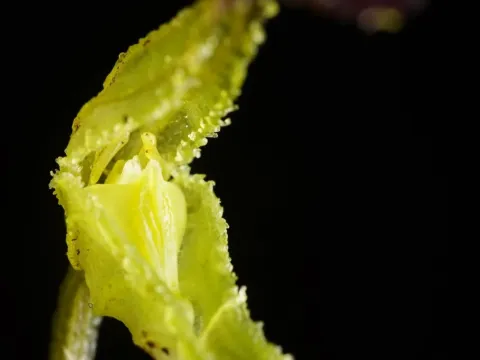
Porroglossum
Porroglossum
Porroglossum is a specialized genus of epiphytic plants belonging to the Orchidaceae family. In an agricultural context, it is cultivated primarily as a high-value botanical specialty for controlled greenhouse environments.
What the section contains

Porroglossum
Originating from the cloud forests of the Andes in South America, particularly in Ecuador, these plants have evolved to thrive in high-altitude, moist, and cool climates. Their native range defines their stringent environmental needs.
Botanically, these orchids are noted for their unique pollination mechanism where the labellum reacts to touch. Unlike many other orchids, they lack large pseudobulbs, making them highly sensitive to any period of water deficiency.
Successful cultivation requires a climate-controlled space with humidity levels consistently above 75%. Providing a steady, cool environment is essential, as the plants suffer significantly when temperatures rise above typical mountain levels.
Agrotechnical management involves growing the plants in small, well-draining baskets or on specialized mounts. The substrate should be highly porous, typically consisting of premium sphagnum moss or small-grade bark, to ensure aeration.
The primary threats include root rot and fungal infections, which are often triggered by stagnant water and poor airflow. Managing water quality and ensuring constant movement of air are the most critical preventative actions for a grower.
Pests like spider mites and mealybugs can infest collections if the surrounding environment is kept too dry or neglected. Early identification and manual cleaning are preferred over heavy chemical usage, which the orchids may be sensitive to.