
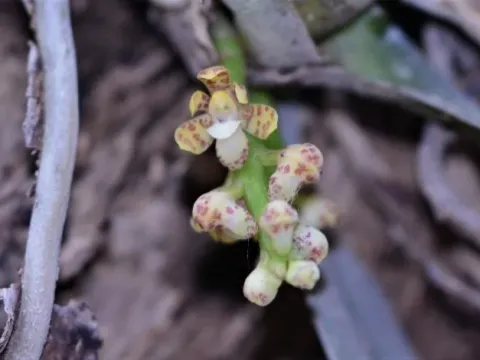
Pomatocalpa
Pomatocalpa
Pomatocalpa is a genus of epiphytic orchids belonging to the Orchidaceae family. These fascinating plants are primarily found in tropical climates across Asia and the Pacific, where they grow as epiphytes on tree trunks and branches in humid forests.
What the section contains


Pomatocalpa
These orchids are characterized by their sturdy stems and leathery leaves, often producing racemes of small, fragrant flowers. Their survival strategy in the wild depends on their ability to capture moisture and nutrients from the air and decaying debris trapped around their roots.
In terms of light, Pomatocalpa requires bright, filtered conditions. Exposure to direct midday sun should be avoided, as it can severely burn the foliage, leading to dehydration and weakening the plant's overall health and aesthetic appeal.
Temperature management is crucial for this genus. They prefer warm, tropical conditions ranging between 20 and 28 degrees Celsius throughout the year. Maintaining consistent warmth is vital for vegetative growth and successful flower initiation.
Watering and substrate requirements are the most demanding aspects of their cultivation. The potting medium must be porous and coarse—typically composed of orchid bark, charcoal, and perlite—to ensure that the root system can dry out between waterings to prevent rot.
Common pests affecting Pomatocalpa include mealybugs and scale insects, which hide in the leaf axils and on the underside of leaves. Manual removal combined with insecticidal treatments is usually effective if the infestation is detected in its early stages.
Fungal rots, specifically black rot, present a significant threat to these orchids. These diseases occur mainly in poorly ventilated environments or when water is allowed to pool in the crown of the plant, leading to the rapid decay of the stem tissues.