
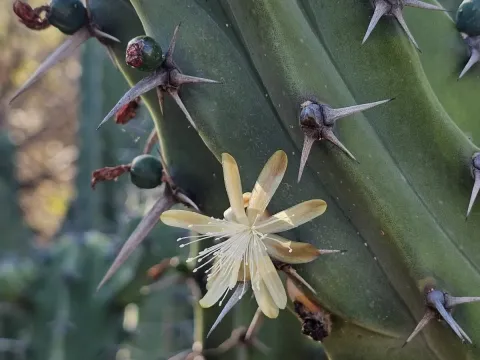
Myrtillocactus
Myrtillocactus
Myrtillocactus is a genus of arborescent cacti in the Cactaceae family, native to arid regions of Mexico and Central America. These plants are recognized for their distinct candelabra-like structure, capable of growing several meters high in their natural habitat.
What the section contains


Myrtillocactus
Successful cultivation requires intense solar exposure with no shading and ambient temperatures between +25 and +35 degrees Celsius. Ensuring proper airflow is essential to prevent moisture stagnation, which is detrimental to the plant's health.
The soil substrate must offer excellent drainage and aeration. A loose mix composed of coarse sand, perlite, and loam is recommended. Maintaining a slightly acidic to neutral pH level is optimal for efficient nutrient uptake.
During the winter, the plant requires a dormancy phase with temperatures between +10 and +12 degrees Celsius and minimal watering. Failure to respect this dormant cycle can result in etiolation and structural weakness of the stems.
Standard agronomic practice includes the application of specialized cactus fertilizers during the growing season. It is vital to use moderate concentrations to avoid root stress and maintain the desired morphological shape of the succulent.
The commercial utility of Myrtillocactus is primarily driven by the harvest of its edible fruits, often called "blueberry cacti." These small, dark-blue berries are flavorful and are consumed locally in their native ranges.
Yield capacity is largely determined by plant age, light intensity, and the availability of pollinators. Fruit production generally occurs in late summer or early autumn under optimal climatic conditions.
Myrtillocactus is widely recognized for its efficacy as a rootstock for grafting more demanding cactus species. Its robust and expansive root system significantly accelerates the development and flowering of the grafted scion.
Harvesting is performed manually once the fruits reach full maturity and display their characteristic deep color. Due to the perishable nature of the fruits, post-harvest logistics must be efficient to preserve quality for fresh market distribution.
The plant also serves as a key ornamental element in arid-climate landscaping, where it provides structural integrity and high tolerance to extreme drought conditions.
The primary threat to the crop is excessive soil moisture, which leads to root and stem rot. These fungal pathogens flourish under cool and damp conditions, making drainage management the most critical aspect of disease prevention.
Common pests include mealybugs and spider mites, which thrive in dry, warm environments. These pests suck nutrients from the epidermis, weakening the cactus and providing an entry point for secondary infections.
Scale insects can also infest the stems, creating hard, protective bumps that hinder growth. Effective control involves a combination of mechanical removal and the strategic application of systemic insecticides.
Preventative measures include maintaining adequate spacing between plants and ensuring high standards of greenhouse hygiene. Regular inspections are necessary to detect and mitigate pest populations before they cause significant economic damage.
- Fusarium rot
- Root rot
- Mealybugs
- Spider mites