

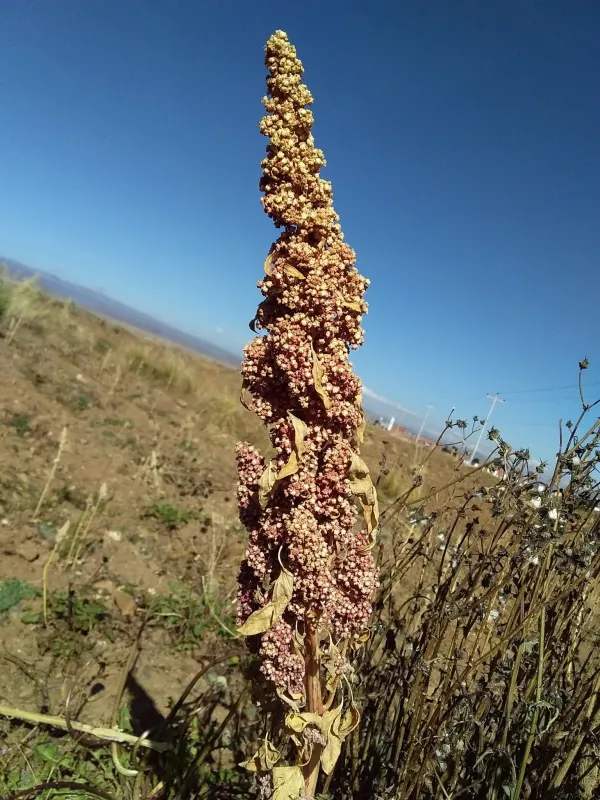
Description
Sowing dates
Quinoa (Chenopodium quinoa Willd.) is an annual pseudo-cereal belonging to the Amaranthaceae family. Sowing is typically performed in early spring as soon as soil temperatures reach 7–10°C, as the seeds require reliable warmth to initiate the germination process.
The ideal planting depth for quinoa is 1–2 centimeters. Ensuring proper seed-to-soil contact is essential for uniform emergence, often achieved through light soil compaction after sowing, which helps retain moisture around the seeds.
Sowing schedules must account for local frost patterns, as young seedlings are susceptible to cold damage. Early sowing is preferred to capitalize on winter and spring soil moisture reserves before the onset of the summer heat.
Planting arrangements generally utilize row spacing between 30 and 50 centimeters. This provides sufficient room for the plant to develop a robust root system and ensures adequate light penetration for the canopy.
Seed density typically ranges from 5 to 8 kilograms per hectare, depending on seed size and purity. Overcrowding should be avoided, as it decreases air circulation and can foster an environment conducive to fungal growth.
Growing requirements
Quinoa is highly adaptable to various growing conditions, though it flourishes best in temperate climates with abundant sunlight. The crop is notably drought-tolerant, utilizing a deep taproot to extract moisture from lower soil horizons.
While quinoa can thrive in diverse soils, it prefers well-drained loams with a neutral or slightly alkaline pH. Waterlogged conditions are detrimental and can lead to root failure and stunted development in the field.
The optimal temperature range for active growth is between 15°C and 25°C. A key biological advantage of quinoa is its high salt tolerance, which makes it a viable candidate for cultivation on marginal or saline lands.
Adequate moisture is critical during germination and the early reproductive stages. However, excess rainfall during maturity can be problematic, potentially causing pre-harvest sprouting of the seeds within the panicles.
Successful quinoa cultivation requires a disciplined crop rotation strategy. Integrating quinoa with legumes can improve soil structure and nitrogen availability, leading to more resilient and productive crops.
Yield
Quinoa yields can vary significantly depending on environmental conditions and management practices, typically ranging from 1.5 to 3 tonnes per hectare. Achieving high yields depends on variety selection and soil fertility.
The genetic potential of modern varieties is high, provided that plants are supplied with balanced micronutrients. Supplemental fertilization during key growth stages can drastically enhance yield stability and seed quality.
Weed management is paramount during the first few weeks of growth, as young quinoa plants have a slow growth rate and can easily be suppressed by weeds. Effective control during this window ensures better canopy closure.
Quinoa is widely utilized in the global food industry due to its complete protein profile and gluten-free nature. This demand drives the focus on increasing production efficiency and post-harvest processing quality.
Ongoing research in breeding focuses on reducing the natural saponin content of the outer pericarp. This improvement simplifies industrial cleaning and enhances the culinary appeal of the final grain product.
Main diseases and pests
Downy mildew is one of the most significant diseases affecting quinoa, particularly in high-humidity environments. Root rot can also occur if soil drainage is inadequate, compromising the plant's overall health and vigor.
Pests such as armyworms and aphids can cause substantial damage to leaves and reproductive structures. These pests can reduce photosynthesis and make the plants more susceptible to secondary infections.
Integrated pest management strategies should be prioritized, focusing on field monitoring and the use of resistant varieties. Maintaining spatial isolation from wild relatives, such as wild goosefoot, helps reduce pest reservoirs.
Chemical intervention should be strictly regulated to ensure food safety standards. Biopesticides are increasingly used as a sustainable alternative to conventional chemicals, offering effective protection with fewer risks.
- Implementing crop rotation to break pest and disease cycles.
- Regular field scouting to detect early signs of infestation.
- Using certified clean seed to prevent the introduction of pathogens.
Harvesting
Harvesting quinoa requires precise timing, as the moisture content must be maintained at 13–15% for optimal storage. This moisture level prevents the growth of mold and ensures long-term seed viability.
Physical maturity is indicated by the plant shedding its leaves and the panicles changing color. The seeds become hard and can be easily dislodged from the panicle, signaling that the crop is ready for collection.
Mechanical harvesting via combine harvesters requires specific adjustments to the threshing mechanism to avoid cracking the grain. Gentle settings are necessary to maintain the integrity of the delicate outer coating.
Swathing, or windrowing, is a common practice where the crop is cut and left to dry in the field before threshing. This helps achieve uniform drying, especially in regions with uneven maturation patterns.
Post-harvest processing involves removing debris and the bitter-tasting saponins. Effective cleaning and polishing lines are essential to transform the raw harvested crop into high-quality food-grade grain for the market.
Content graph
Connections · Quinoa
Most often together:
Marketplace

