
Fat hen
Chenopodium album L.
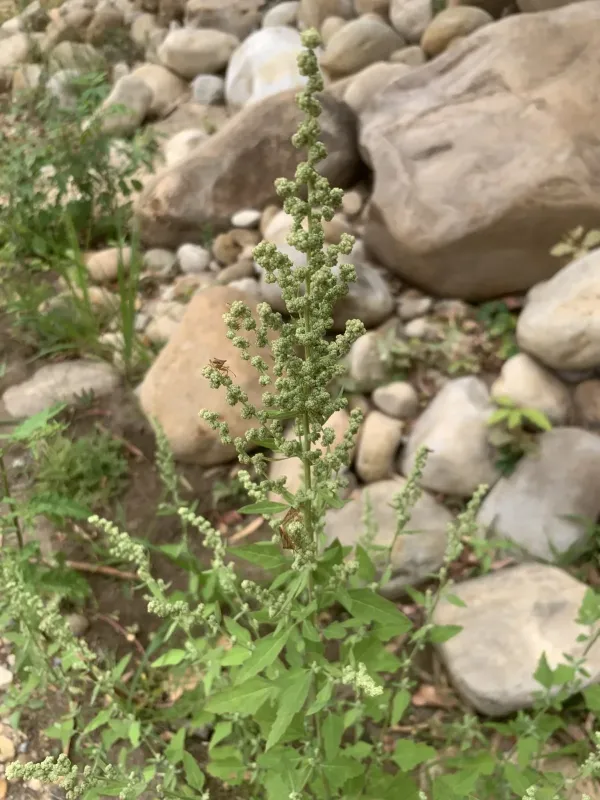
Description
Sowing dates
In natural conditions, Chenopodium album demonstrates exceptional seed germination, with seeds remaining viable in the soil for many years. When attempting cultivation as a pseudocereal crop, sowing is carried out in early spring, as soon as the soil warms up to 5–8 degrees Celsius.
Seeds are sown at a depth of no more than 1–2 centimeters, as the small seed material requires good contact with the moist soil layer for effective germination. Seedlings appear relatively uniformly, quickly forming a basal rosette of leaves.
An important aspect is the sowing density, which influences the size of the inflorescences and seed weight. To obtain a high-quality yield, row spacing of 30–45 centimeters is maintained, which facilitates subsequent crop care.
The crop possesses a high initial growth rate, allowing it to compete effectively with other plants for access to nutrients and light. However, with excessive density, seedlings may become etiolated, reducing overall vegetative biomass productivity.
Autumn sowing is rarely used for this crop, as seeds require a vernalization phase and are sensitive to extremely low temperatures at the seedling stage, making the spring cycle preferable.
Growing requirements
Chenopodium album is considered an extremely plastic species, capable of adapting to a wide range of soil and climatic conditions. It grows best on fertile, nitrogen-rich loamy soils with a neutral or slightly alkaline pH.
The plant has increased requirements for light levels and is a typical photophilous species that does not tolerate heavy shading well. When sunlight is insufficient, productivity drops sharply, and the development of reproductive organs slows down.
Regarding moisture requirements, the plant shows moderate demand, possessing a powerful taproot system capable of absorbing water from deep soil horizons. It is resistant to short-term soil drought.
The temperature range for the optimal growing season is 18–25 degrees Celsius. Despite its heat resistance, in extremely high temperatures combined with moisture deficits, biomass accumulation rates can decrease significantly.
The plant is highly responsive to the application of organic and mineral fertilizers. Under conditions of high soil nitrogen content, Chenopodium album demonstrates explosive growth, significantly increasing stem height and total leaf surface area.
Yield
The yield potential of Chenopodium album as a pseudocereal crop is determined by growing conditions and variety characteristics. In favorable conditions, up to 1.5–2 tons of seeds per hectare can be harvested.
As a forage crop, it is capable of producing significant volumes of green mass, reaching 20–30 tons per hectare. The nutritional value of this mass is comparable to many legumes and grasses during the early flowering stage.
Yield levels depend heavily on harvest timing, as the seeds are prone to uneven ripening and shattering. Timely monitoring of developmental stages allows for minimizing losses and increasing the output of pure grain.
The use of modern agricultural methods allows for significantly higher yield indicators compared to wild populations. Breeding varieties are distinguished by more compact structures and larger panicles.
It is important to keep in mind that the high seed productivity of a single plant (up to 100,000 seeds) makes it a potentially aggressive object if crop rotation is not organized correctly, requiring strict control during cultivation.
Main diseases and pests
Chenopodium album is affected by a number of pathogens, including powdery mildew, which manifests as a white coating on the leaves in high humidity. Various leaf spots caused by fungi of the genera Cercospora and Phoma may also occur.
Among pests, the beet leaf miner is the most dangerous, as its larvae create tunnels in the leaf blade, reducing the photosynthetic area. The plant can also be damaged by aphids and spider mites during dry periods.
In industrial fields, attacks by pests characteristic of the Amaranth family, such as the beet webworm, are possible. Regular monitoring of the crops allows for the timely identification of infestation centers.
Protection methods include the use of crop rotation, which prevents the accumulation of soil-borne infections and pests in areas of intensive cultivation. Chemical treatment is rarely used; biological methods are preferred.
Competing weeds can also negatively affect crop development in the initial stages, so timely inter-row cultivation and the creation of optimal stand density are important agricultural practices.
Harvesting
Harvesting of Chenopodium album seeds is carried out in the full maturity phase when the panicles turn brownish or yellowish. It is important to avoid over-ripening, as seeds begin to shatter intensively at the slightest mechanical impact.
A two-stage harvesting method is used: first, the mass is mowed into windrows for ripening, followed by picking and threshing. This achieves uniform seed drying and reduces losses from shattering on the stem.
When harvesting for green mass, mowing is performed during the period from the beginning of flowering to the onset of seed formation. During this time, the content of protein and beneficial micronutrients in the leaves and stems reaches its maximum.
After threshing, the seeds require mandatory cleaning of impurities and drying to 12–14 percent moisture, which is necessary for long-term storage without the risk of mold or loss of germination.
For small-scale farms, manual harvesting by cutting the panicles is permissible, allowing for maximum preservation of the harvest in private conditions where mechanization is limited or economically unviable.