
Epazote
Chenopodium ambrosioides L.
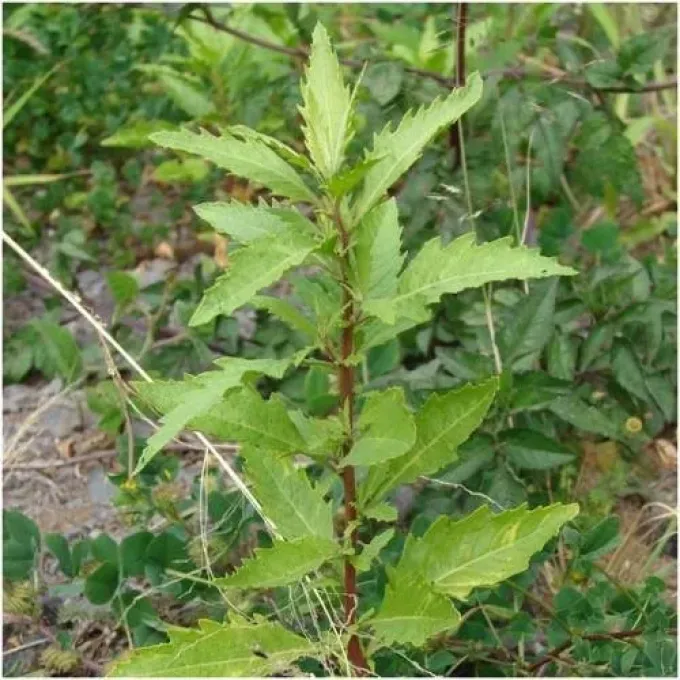
Description
Sowing dates
Epazote, or Chenopodium ambrosioides, is an herbaceous plant belonging to the Amaranthaceae family. It is typically grown as an annual crop and requires warm soil temperatures for successful germination, usually starting in late spring when frost is no longer a concern.
Direct seeding in the field is a common practice, with seeds sown at a depth of about 1 centimeter. The rows should be spaced 40–50 centimeters apart to provide ample space for the plants to spread and develop their characteristic foliage.
For more control, seedlings can be started in trays under protected conditions. This ensures a higher rate of survival and uniform establishment, which is particularly beneficial for large-scale production.
The seeds have excellent germination rates provided they receive consistent moisture during the establishment phase. Once the seedlings are robust, they demonstrate significant resilience to fluctuating weather conditions.
Timely thinning is necessary if seeds were sown densely to ensure every plant has adequate airflow and access to nutrients. This process helps to minimize competition and promotes stronger plant development.
Growing requirements
Epazote flourishes in full sun, which is crucial for maximizing the production of its essential oils. Areas with high light intensity are ideal for ensuring that the plant develops its full aromatic potential.
The plant is versatile regarding soil types but prefers well-drained, sandy loam soils that are rich in organic matter. Proper drainage is essential, as waterlogged conditions often lead to root rot and other physiological issues.
Climate-wise, the plant thrives in warm, temperate to tropical regions. While it is adaptable, it performs best in environments where temperatures remain consistently between 20 and 28 degrees Celsius throughout the growing cycle.
Regular irrigation is needed during the peak vegetative stage, especially in hot and dry climates. However, once the plant is well-established, it is moderately drought-tolerant, although moisture stress can reduce the overall yield.
Nutrient management is straightforward, requiring a balanced fertilizer application during the early growth phase. Excess nitrogen should be avoided during the late stages to prevent overly soft growth that is prone to pests.
Yield
The yield of Epazote is measured primarily by the quantity of its fresh or dried leaves and flowering tops. On average, producers can expect significant biomass yields per hectare when optimal agronomic practices are followed.
Harvesting at the correct phenological stage is the key factor in optimizing yield. For maximum essential oil concentration, the plants must be harvested when they are in full flower, before the seeds begin to set.
Using certified, high-yield varieties can drastically improve production efficiency. These varieties often have a more uniform growth pattern, which simplifies mechanical harvesting processes and improves post-harvest processing.
Proper weed management in the early stages of plant development is a critical factor in ensuring high yields. Because Epazote starts as a slow-grower, it requires a clean field to maximize the total harvested area.
Integrating organic matter back into the soil after the harvest cycle helps maintain long-term fertility. This sustainable approach is vital for achieving consistent, high-quality yields in subsequent seasons.
Main diseases and pests
Epazote is relatively hardy, but it can be affected by common pests such as aphids and spider mites. These pests typically congregate on the underside of the leaves and can cause yellowing if not addressed promptly.
Fungal pathogens like powdery mildew are the most common diseases, especially when plants are spaced too closely or grown in high-humidity conditions without adequate airflow. Soil-borne diseases can be minimized by avoiding monoculture.
Integrated Pest Management (IPM) strategies are highly recommended to keep populations of harmful insects at bay. This includes encouraging natural predators and avoiding broad-spectrum chemical sprays whenever possible.
Maintaining a healthy, vibrant plant through proper irrigation and nutrient levels serves as the first line of defense against disease. Stressed plants are always more susceptible to infections and infestations.
Field sanitation after the harvest is paramount. Removing plant debris from the site significantly reduces the inoculum for future seasons, effectively breaking the cycle of common soil-borne pathogens.
Harvesting
The harvest should occur when the plants reach the peak flowering stage. During this time, the concentration of active essential oils, specifically ascaridole, is at its highest, providing the best quality for pharmaceutical and culinary uses.
Harvesting is usually done by cutting the upper two-thirds of the plant. Mechanical harvesters or manual sickles can be used, depending on the size and scope of the agricultural operation.
Immediate post-harvest processing is critical. The cut biomass should be moved to a shaded, well-ventilated drying area to prevent fermentation and the loss of aromatic compounds through rapid, uneven drying.
Dried leaves should be stored in opaque, moisture-proof containers to preserve their quality. Exposure to light and humidity will quickly degrade the product, leading to a significant loss of its medicinal properties.
Seed harvesting, if desired, should be carried out after the seeds have turned deep brown. Proper drying of the seeds is required before long-term storage to prevent fungal contamination and loss of viability.