
Maple-leaved goosefoot
Chenopodium hybridum L.
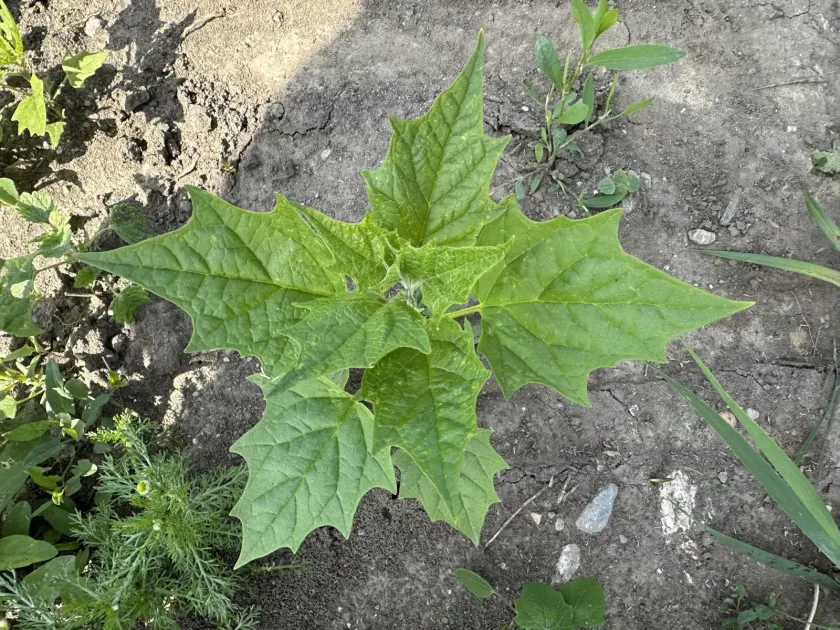
Description
Growing requirements
The maple-leaved goosefoot (Chenopodium hybridum L.) belongs to the Amaranthaceae family and is a common annual herb found in agricultural landscapes. Its name comes from the distinct leaf shape that resembles a maple leaf.
This plant is widely distributed across the temperate regions of Europe, Asia, and North America. It thrives in nitrogen-rich soils and is commonly found in gardens, open fields, and along roadsides, often acting as a significant competitor for resources.
Botanically, it features an erect, branched stem and characteristic large, triangular leaves with sharp, acuminate lobes. The plant is monoecious, producing numerous small green flowers in terminal panicles, leading to high seed production.
The species prefers well-drained, fertile soils with sufficient moisture levels. It is highly adaptable to various light conditions but performs best in full sun, where it can quickly establish itself and outcompete young seedlings of primary crops.
Management requires a combination of mechanical weeding and chemical control. Since the seeds can remain viable in the soil for several years, long-term monitoring and crop rotation are essential to reduce the soil seed bank.
Main diseases and pests
Maple-leaved goosefoot acts as a natural host for several agricultural pests, including aphids and various lepidopteran larvae. These insects can easily migrate from the weed to nearby crop plants, causing significant yield losses.
The plant is susceptible to various fungal pathogens, such as downy mildew and rust, which can proliferate and spread to susceptible crops in the immediate vicinity during wet and humid growing seasons.
Furthermore, it serves as a reservoir for certain plant viruses. When aphids feed on the infected weed, they can transmit these viruses to healthy vegetable crops, leading to stunted growth and reduced fruit quality.
Integrated weed management (IWM) programs recommend using selective herbicides during the early stages of the crop cycle. Preventing seed set by timely cultivation is the most effective way to manage this weed infestation.
Consistent field scouting is crucial for identifying early outbreaks. By eliminating the goosefoot population during the early vegetative stage, farmers can reduce the pressure of pests and diseases on their main agricultural products.