
Strawberry blite
Chenopodium baccatum Labill.
Description
Sowing dates
Strawberry blite (lat. Chenopodium baccatum), belonging to the Amaranthaceae family, is an annual herbaceous plant. In temperate climates, seeds are sown outdoors in spring once the soil warms up to 10–12°C, typically from late April to early May.
Growing the crop via transplants is possible for an earlier harvest. In this case, seeds are sown in trays in March, with seedlings being transplanted to their final location in late May, after the risk of frost has passed.
The seeds have a high germination rate, so they should be sown at a depth of no more than 1–1.5 cm. The planting layout must account for the rapid development of vegetative biomass, with an optimal row spacing of 40–50 cm.
When sowing, it is important to maintain sufficient plant density, as sparse stands promote weed growth in the aisles. After emergence, thinning is essential, leaving at least 20–25 cm between plants within a row.
Special attention should be paid to autumn soil preparation, including deep tilling and the application of organic fertilizers. Strawberry blite prefers loose, structured soils with a neutral or slightly alkaline pH.
Growing requirements
The crop is light-loving, requiring open, well-lit areas for full development and intense berry coloration. In shaded conditions, the plants become leggy, and fruit yield decreases significantly.
Strawberry blite exhibits moderate drought tolerance, but for the formation of high-quality fruit clusters, it requires regular watering during the active growth phase. Excessive soil moisture can lead to root rot and the development of fungal infections.
The plant has no specific soil requirements but thrives best in light loams and humus-rich chernozem. On acidic soils, preliminary liming is recommended to optimize pH levels.
The temperature optimum for the vegetation of strawberry blite ranges from 18–25°C. The plant can withstand short-term temperature fluctuations, but prolonged cold snaps significantly slow down metabolic processes and berry ripening.
An important aspect of crop management is maintaining clean fields. Regular weeding and inter-row cultivation are necessary to ensure oxygen access to the root system and to conserve soil moisture.
Yield
The yield of strawberry blite depends largely on the level of agronomic management and weather conditions during the growing season. Under favorable conditions, one can harvest a significant amount of edible fruits, which resemble small raspberries in shape.
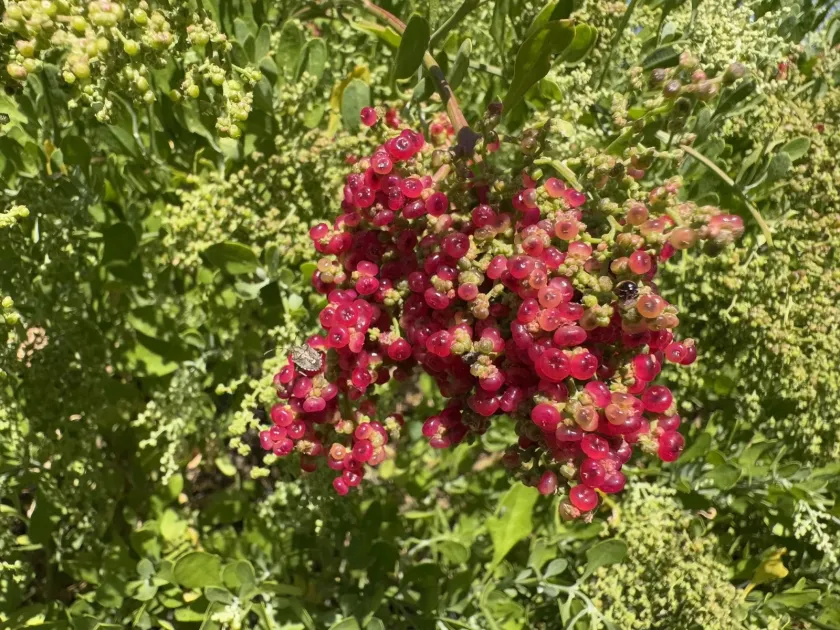
The fruits of the plant are fleshy calyces that turn bright red or deep pink upon ripening. Unlike many other species of Chenopodium, these structures have a sweetish taste and are suitable for human consumption.
The economic use of the crop includes utilizing the berries as an ingredient for fruit salads, desserts, and beverages. The foliage of young plants can also be consumed as a fresh vitamin-rich supplement.
Maximum productivity is achieved through timely irrigation and fertilization with complex mineral fertilizers during the flowering phase. Nutrient deficiency leads to the formation of small, dry fruits with poor flavor quality.
The fruiting period is extended, allowing for selective harvesting as the berries ripen. This feature makes the crop attractive for small-scale gardening, ensuring a continuous supply of produce.
Main diseases and pests
Like many other members of the Amaranthaceae family, strawberry blite can be affected by pests typical of this family. Aphids are the most dangerous, as they suck sap from young shoots and leaves, weakening the plant's immune system.
In high-humidity conditions, fungal diseases such as downy mildew may develop. The first signs of infestation are spots on the leaves, which eventually lead to premature wilting and drying of the leaf blade.
Root rots pose a serious threat if irrigation schedules are ignored or water stagnates. To prevent diseases, strict crop rotation must be practiced, and overcrowding should be avoided to ensure good air circulation.
Among insect pests, leaf beetles are known to cause significant damage to the vegetative mass during early growth stages. Regular monitoring of crop condition allows for timely detection and the application of biological control measures.
The use of chemical pesticides on this crop is limited since the fruits are edible. Preference should be given to preventive measures, such as disinfecting seeds before sowing and maintaining high soil fertility.
Harvesting
Harvesting begins when the berries reach full biological maturity, becoming soft and brightly colored. The harvest should be conducted in dry weather to avoid fruit spoilage and mold development during storage.
Strawberry blite berries are extremely sensitive to mechanical damage due to their juiciness. When harvesting, it is recommended to use small containers to prevent the crushing of the lower layers of the produce.
If storage is intended, the berries must be processed within a few hours of harvesting. They do not transport well over long distances when fresh, so processing directly at the site of cultivation is preferable.
For long-term storage, berries can be flash-frozen or dried. Once dried, they retain their nutritional properties and can be used as a healthy food supplement during the winter months.
After fruiting is complete, plant residues should be removed and disposed of to prevent the accumulation of pathogens and pests in the soil for the following year.