
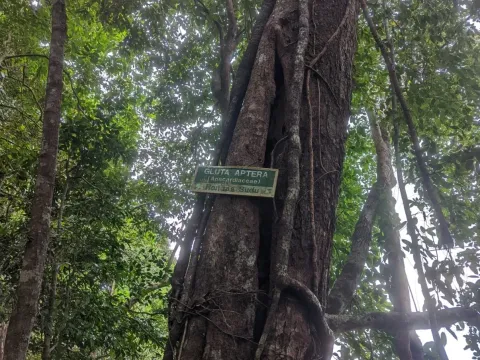
Gluta
Gluta
The genus Gluta belongs to the Anacardiaceae family and consists of evergreen trees native to the tropical forests of Southeast Asia. These trees are well-adapted to high-humidity environments with consistent warm temperatures throughout the year, making them typical representatives of tropical rainforests.
What the section contains
 Gluta aptera
Gluta aptera
Gluta aptera
 Gluta curtisii
Gluta curtisii
Gluta curtisii
 Gluta laccifera
Gluta laccifera
Gluta laccifera
 Gluta malayana
Gluta papuana
Gluta papuana
Gluta malayana
Gluta malayana
Gluta papuana
Gluta papuana
 Gluta renghas
Gluta rostrata
Gluta rostrata
Gluta rugulosa
Gluta rugulosa
Gluta tavoyana
Gluta tavoyana
Gluta torquata
Gluta torquata
Gluta tourtour
Gluta tourtour
Gluta renghas
Gluta renghas
Gluta rostrata
Gluta rostrata
Gluta rugulosa
Gluta rugulosa
Gluta tavoyana
Gluta tavoyana
Gluta torquata
Gluta torquata
Gluta tourtour
Gluta tourtour
 Gluta travancorica
Gluta travancorica
Gluta travancorica
 Gluta usitata
Gluta usitata
Gluta usitata
 Gluta velutina
Gluta velutina
Gluta velutina
 Gluta wallichii
Gluta wrayi
Gluta wrayi
Gluta wallichii
Gluta wallichii
Gluta wrayi
Gluta wrayi
Gluta
For optimal development, Gluta trees require deep, fertile, and well-drained soils. They thrive in areas where moisture availability is constant, yet they are sensitive to waterlogging, which necessitates sites with excellent soil drainage characteristics to prevent root system diseases.
In terms of climate requirements, the plants prefer areas with minimal seasonal temperature variation. Their growth is significantly influenced by annual rainfall patterns; therefore, they are most prevalent in regions where the climate supports a lush and dense vegetative cover throughout the entire growth cycle.
Agricultural practices for the cultivation of Gluta involve careful site selection and the provision of adequate shade for young saplings. As the trees reach maturity, they become more tolerant to sunlight, although maintaining a balanced microclimate within the forest canopy is essential for long-term health.
One critical biological feature of many Gluta species is the presence of potent resinous sap in their wood and foliage. This sap is known to cause severe contact dermatitis, which requires that any horticultural or forestry work involving these trees be performed with appropriate protective gear.
The primary economic value of the Gluta genus lies in its high-quality timber, which is highly sought after for its exceptional hardness, durability, and striking aesthetic appearance. It is frequently utilized in high-end cabinet making, fine furniture production, and architectural millwork.
Harvesting procedures must be managed with great care due to the chemical composition of the tree's internal fluids. The wood must undergo a rigorous seasoning and drying process to ensure it achieves stability, reducing the risk of warping or cracking after it has been crafted into finished products.
Beyond timber, certain species within the Gluta genus have historically been studied for the extraction of resins used in traditional lacquering processes. These secondary products highlight the versatility of the trees, though their commercial use is currently secondary to the value of the raw wood.
Sustainable harvest management is vital for the preservation of Gluta populations in their native habitats. Forestry operations typically employ selective logging techniques to maintain ecosystem integrity, ensuring that harvesting activities do not compromise the long-term regeneration potential of the forest.
The processing of the harvested wood involves sophisticated technology to sort and treat the material properly. By maximizing the yield from each tree and reducing waste during milling, the industry aims to balance economic profitability with the responsible stewardship of tropical forest resources.