
Gluta laccifera
Gluta laccifera
Description
Growing requirements
Gluta laccifera is a notable evergreen tropical tree belonging to the Anacardiaceae family. It is native to the tropical forests of Southeast Asia, thriving in environments characterized by high humidity and consistent warmth.
The tree requires nutrient-rich, deep, and well-draining soil to support its extensive root system. It is highly sensitive to temperature fluctuations and frost, which limits its commercial cultivation to strictly tropical regions.
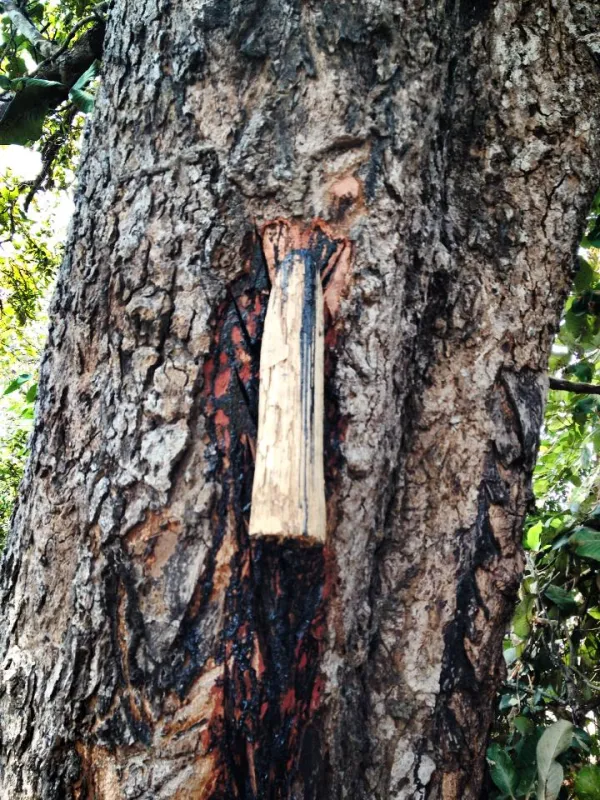
Botanically, it is known for its durable wood and the resinous sap harvested from its bark. The foliage is thick and leathery, an adaptation that allows the tree to withstand strong tropical sunlight and high evaporation rates.
In terms of agricultural management, maintaining the optimal soil moisture is crucial, as the tree requires constant water access without the risk of waterlogging, which could lead to root decay.
The economic value of this culture lies primarily in its use in the varnish industry, where its unique resin is highly sought after for creating high-quality, weather-resistant coatings.
Main diseases and pests
The primary threats to Gluta laccifera include root rot caused by stagnant water, which compromises the tree's health and reduces the yield of resinous sap.
Pests such as bark beetles and wood-boring insects represent a significant danger, as they tunnel into the trunks, creating entry points for fungal pathogens.
In managed forestry, regular inspection of the trunk for boreholes is a vital practice to catch infestations early before they lead to structural failure or death of the tree.
Environmental stressors like deforestation and habitat fragmentation also pose long-term risks to the survival of natural stands of this species.
Integrated pest management strategies are often employed to maintain the health of plantations, focusing on biological controls rather than broad-spectrum chemicals.