
Gluta wallichii
Gluta wallichii
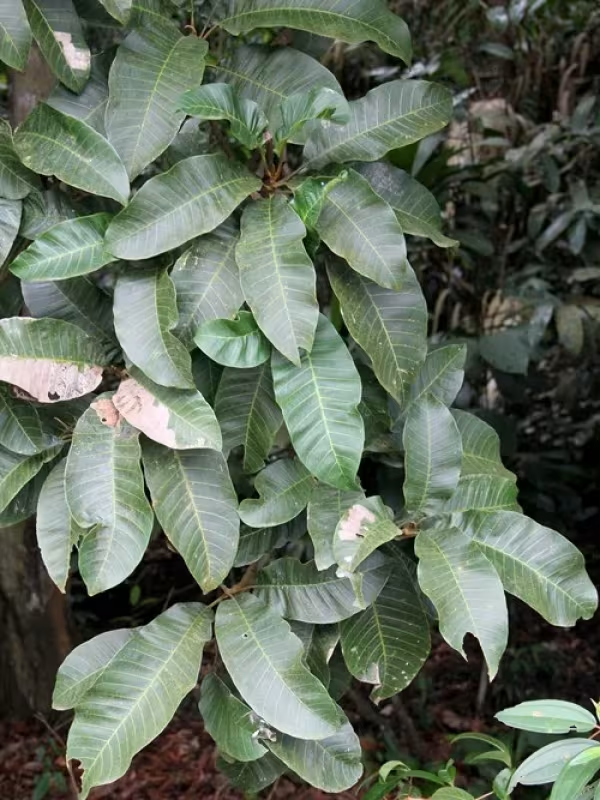
Description
Growing requirements
Gluta wallichii is a prominent tropical tree species belonging to the Anacardiaceae family. It is native to the primary rainforests of Southeast Asia, specifically found in regions of Malaysia and Thailand.
The tree thrives in lowland tropical forests where high humidity and consistent rainfall are the norm throughout the year. It performs best in areas where the soil is well-drained and nutrient-rich.
Soil preferences involve deep, acidic soils with high organic matter content. Because the species naturally occupies tropical environments, it is highly sensitive to frost and cool temperatures, requiring year-round warmth.
Regarding silviculture, the plant requires a sufficient canopy gap to reach maturity but thrives in the stable, humid microclimates provided by primary forest structures. It is often found near water bodies where moisture levels remain elevated.
It is important for foresters and growers to exercise caution when handling this plant. The sap contains phenolic compounds, which can cause severe skin irritation and contact dermatitis in humans.
Harvesting
Gluta wallichii is primarily harvested for its valuable wood, which is commercially marketed as Rengas. The wood is renowned for its durability and distinctive, rich red-to-brown color with dark streaks.
The wood is frequently utilized in high-end cabinet making, flooring, and fine furniture. Its density and resistance to natural decay make it an excellent material for structural components that require both strength and aesthetic appeal.
In addition to its timber value, the species contributes significantly to local ecological stability. It provides critical habitat for avian species and insects within its native forest range.
Harvesting strategies are increasingly focused on selective logging to prevent deforestation. By managing timber extraction sustainably, the ecosystem services of the forest remain intact while providing economic value.
After felling, the timber undergoes a rigorous seasoning process. This helps to stabilize the wood and reduce the reactivity of the natural resins, ensuring safety during the final manufacturing stages of wood products.