
Gluta renghas
Gluta renghas
Description
Growing requirements
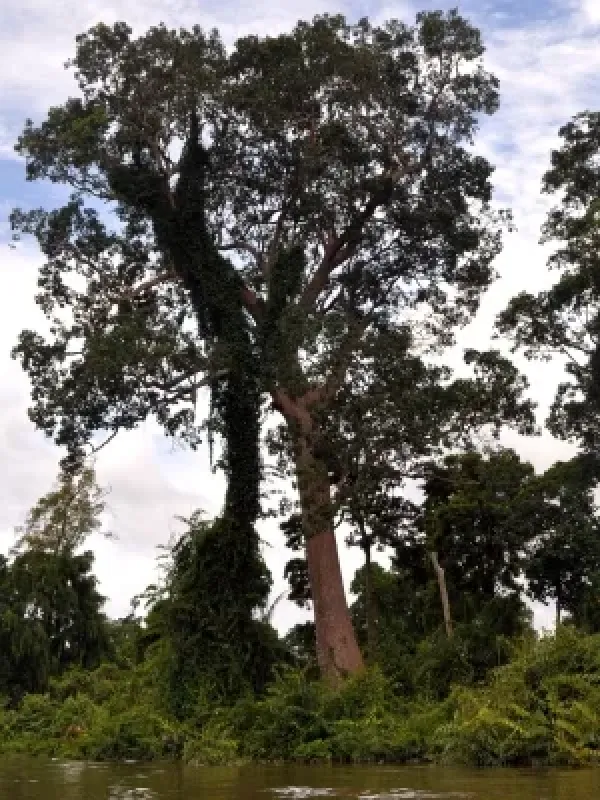
Gluta renghas is a massive, evergreen tropical tree belonging to the Anacardiaceae family. In its native rainforest environment, this species can reach impressive heights of up to 50 meters, with a trunk diameter that reflects its stature as a dominant canopy tree in Southeast Asia.
The geographic range of this species extends across Malaysia, Indonesia, and Thailand. It naturally thrives in low-lying tropical environments, specifically in riparian zones and swampy forests, where the tree benefits from consistent water availability and nutrient-rich sediments.
Climatic requirements for Gluta renghas are strictly equatorial. The tree demands high, constant temperatures throughout the year and significant annual precipitation. It is highly intolerant of drought conditions and cold snaps, which limits its growth exclusively to the tropical belt.
Regarding soil, the species prefers deep, moist, and well-drained substrates. While it can adapt to clay-heavy soils found in river basins, it flourishes best in fertile alluvial lands where oxygen and organic matter are sufficiently available for long-term development.
Cultivation practices for this species focus primarily on plantation forest management. Because the tree exhibits slow initial growth, young specimens require protection from direct sunlight and periodic monitoring to ensure stable establishment in a controlled environment.
Harvesting
The primary economic use of Gluta renghas is the production of premium timber, globally known as rengas wood. The heartwood is highly prized for its rich, deep red color and distinctive dark streaks, making it a sought-after material for high-end furniture manufacturing.
A major challenge during harvesting and processing is the presence of a potent irritant in the tree's sap. This substance causes severe dermatitis upon contact with human skin. Consequently, forestry workers are mandated to wear specialized protective equipment to prevent exposure to sap and wood dust.
Once properly treated and seasoned, the wood is noted for its high density, excellent hardness, and resistance to decay. It is widely used for flooring, luxury cabinetry, boat building, and artistic wood carvings, where durability and aesthetic appeal are paramount.
Sustainable harvesting strategies are essential for the long-term viability of this timber species. Selective logging techniques are often applied to ensure that the ecological integrity of the forest remains intact while fulfilling commercial demand for the high-value wood.
Beyond its timber value, the tree serves as a vital component of its ecosystem, supporting various forms of biodiversity. Conservation efforts often focus on protecting natural stands while promoting responsible harvesting practices to ensure the species remains a part of the tropical landscape for future generations.