
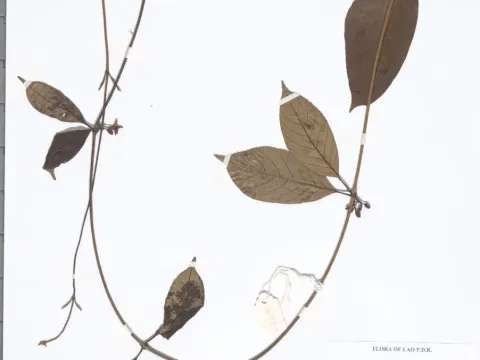
Finlaysonia
Finlaysonia
Finlaysonia is a genus of woody vines belonging to the Apocynaceae family. These plants are native to tropical regions of Asia, where they thrive in warm and humid environments, often climbing on larger vegetation to reach sunlight.
What the section contains

Finlaysonia
The cultivation of Finlaysonia requires well-draining, nutrient-rich soil that mimics the forest floor conditions of their natural habitat. Maintaining a consistent moisture level is vital, but the root system must be protected from prolonged saturation to prevent decay.
Climate requirements include stable temperatures, ideally between 20°C and 30°C. In regions outside their native tropical zone, these plants must be kept in greenhouses or climate-controlled environments where cold stress can be completely avoided.
Light exposure is a critical factor for successful growth. While they prefer bright, indirect sunlight, intense afternoon rays should be filtered to prevent leaf scorching, especially in younger plants.
Agricultural maintenance involves structural support systems, such as trellises or poles, to accommodate their climbing habit. Regular pruning is necessary to manage plant density and improve light penetration to the inner parts of the canopy.
Spider mites are the most frequent pests affecting Finlaysonia, particularly in indoor environments with low humidity. They puncture leaf tissues, causing stippling and eventual leaf loss if not addressed early.
Root rot caused by pathogenic fungi like Phytophthora remains a major threat during the rainy season or in overwatered containers. Proper soil aeration is the best preventative measure against these soil-borne diseases.
Mealybugs can cluster in the leaf axils, sucking the plant's sap and weakening the overall vigor of the vine. Manual removal or the application of horticultural oils is recommended for effective management.
Fungal leaf spots can develop in stagnant, humid air. Ensuring good airflow within the planting area is essential to disrupt the life cycle of these pathogens.
Viral infections, often spread by sucking insects, can result in stunted growth and distorted leaf development. Eradicating the vector populations is the primary method of controlling the spread of such diseases.