
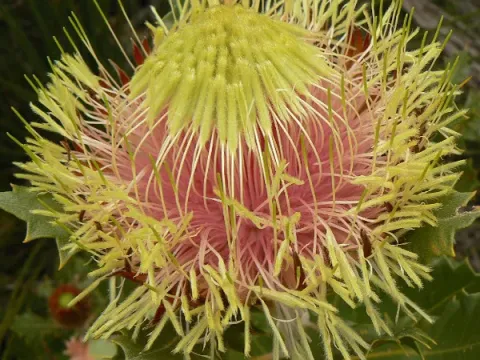
Dryandra
Dryandra
Dryandra is a genus of evergreen shrubs and small trees belonging to the Proteaceae family, native exclusively to Western Australia. These plants are well-adapted to arid environments and nutrient-poor soils, making them unique subjects for specialized horticulture.
What the section contains


Dryandra
Successful cultivation requires soil that is extremely well-draining, typically acidic or neutral in pH. Due to their evolutionary adaptation to phosphorus-deficient soils, the plants are highly sensitive to fertilizers, and using standard high-phosphorus mixtures can cause severe root damage.
The climate requirements include plenty of direct sunlight and excellent air circulation. While native to Mediterranean-like climates, they are generally not frost-hardy and should be kept in greenhouses or brought indoors during winter in colder regions.
Water management is critical: the plants require consistent moisture during the growing season but must never remain in waterlogged soil. A porous, sandy-based potting mix is recommended for container-grown specimens to prevent root rot.
In economic terms, Dryandra is prized for its ornamental value. Its complex, architecturally striking flower heads are highly valued in the floral industry as fresh cut flowers or as dried botanical components in premium arrangements.
Root rot caused by Phytophthora species is the most significant threat to the health of Dryandra. Once infected, the plant rarely recovers, which is why preventive measures like perfect drainage and soil sterilization are paramount for every grower.
Scale insects and mealybugs are the primary pests that affect the foliage and stems of these plants. Their presence is usually an indication of stress, often caused by inadequate lighting or poor airflow in the cultivation environment.
Spider mites can become problematic during hot, dry periods, particularly if the plant is kept in a static indoor environment. Regular monitoring of the undersides of the leaves is advised to detect early signs of infestation.
Iron deficiency, resulting in chlorosis, is common when the soil pH rises above the optimal range for Proteaceae. Maintaining the correct acidity level is essential for ensuring that the plant can uptake critical micronutrients.
Management of pests and diseases should focus on biological and cultural controls rather than harsh chemical interventions. Because these plants are sensitive to many common additives, any chemical treatment should be tested on a small sample first.