
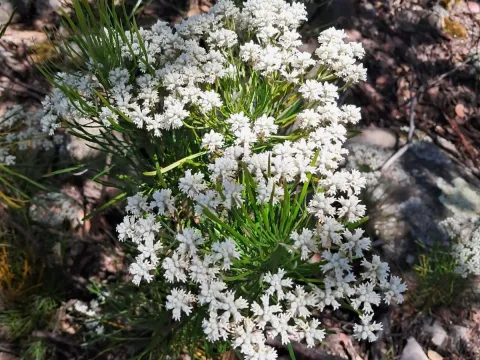
Conospermum
Conospermum
Propagation of Conospermum in cultivation is primarily achieved through seeds or cuttings. Seeds should be sown in a well-draining substrate with low phosphorus content, as plants in the Proteaceae family are highly sensitive to excess phosphorus.
What the section contains

Conospermum
The optimal time for sowing is early spring when the soil temperature stabilizes at 18–20 degrees Celsius. It is crucial to maintain moderate moisture until germination occurs, avoiding waterlogging, which is fatal for young seedlings.
Cuttings are best taken in late summer using semi-hardwood shoots of the current season. Cuttings should be treated with root-promoting hormones and placed in a sterile perlite medium to prevent pathogen development.
Transplanting seedlings to open ground or permanent containers is carried out after full acclimatization, typically 6–8 months after rooting.
It is essential to note that Conospermum develops its root system slowly; therefore, transplanting mature specimens is discouraged to avoid damaging the delicate root architecture.
Conospermum belongs to the Proteaceae family and is native to Australia. In its natural habitat, the plant thrives in nutrient-poor, sandy soils with a pronounced acidic reaction.
The crop has strict requirements for drainage; any standing moisture in the root zone inevitably leads to plant death. The soil mix must be highly porous, containing gravel or coarse-grained sand.
For successful growth, the plant requires intense sunlight. Conospermum tolerates shade poorly, which leads to leggy shoots and the loss of the shrub's ornamental form.
The temperature regime should be moderately warm; the culture does not tolerate severe frosts and requires protection from cold, drying winds that can damage tender leaves and inflorescences.
Air humidity levels for this plant should be low to moderate. Excessive humidity combined with high temperatures promotes the development of fungal infections.
The primary threat to Conospermum is root rot, caused by soil saturation or the application of fertilizers containing high levels of phosphorus.
Pests such as mealybugs or spider mites may affect the plant in greenhouse conditions if ventilation is poor. Specialized acaricides and insecticides should be used for control.
Leaf spot is a common disease caused by Phytophthora fungi. Prevention involves keeping the foliage dry and maintaining adequate spacing between plants to improve airflow.
Insufficient root system aeration makes the plant susceptible to Phytophthora rot. Regular inspections for signs of wilting are vital, as this is often the first indicator of root damage.
Proper mineral fertilizer selection is a key protection factor. Using fertilizers specifically labeled as phosphorus-free eliminates the risk of chemical root burn and enhances the plant's natural immunity.