

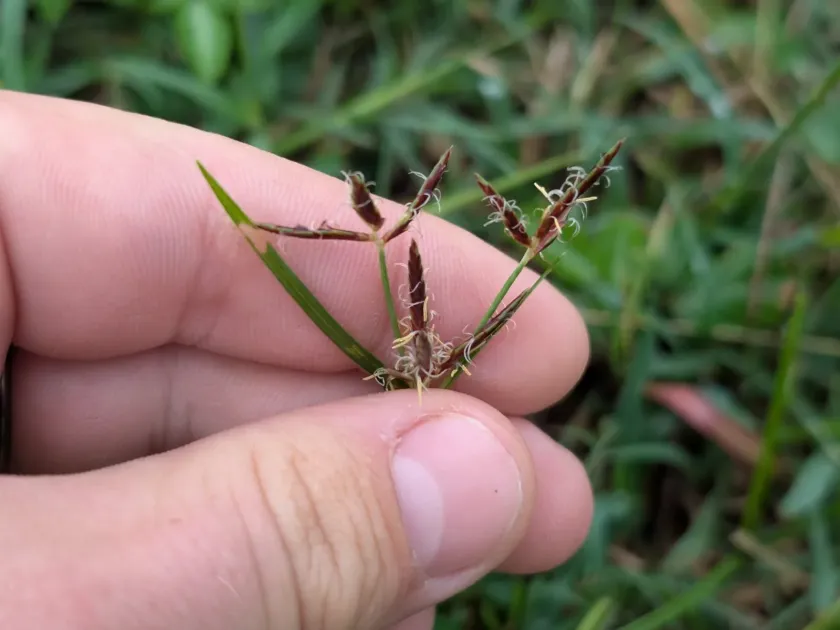
Description
Growing requirements
Nut grass (Cyperus rotundus L.) is a perennial plant belonging to the Cyperaceae family. While globally recognized as a highly invasive weed, it is also cultivated in specific regions for its medicinal properties and the production of fragrant essential oils.
The plant originates from tropical and subtropical regions but has successfully naturalized across various climatic zones. It thrives in diverse soil types, ranging from sandy loams to heavier clays, provided there is adequate sunlight and moisture during the growing season.
Botanically, the species is distinguished by its complex underground network of stolons and tubers. These tubers serve as vital storage organs, allowing the plant to survive extreme weather conditions, including prolonged drought and high-temperature stress.
Cultivation requirements focus on maintaining soil fertility and moisture balance during the early stages of development. Regular irrigation and weed control are essential for ensuring high-quality yield of the harvested tubers in commercial plantations.
Economically, the plant is harvested for its tubers, which are rich in bio-active compounds. These extracts are widely used in traditional medicine, fragrance production, and various industrial applications, making it a crop of interest for specialized agriculture.
Main diseases and pests
Typical plant health issues involve fungal infections such as rust and leaf spots, particularly in regions with high humidity. These diseases weaken the plant's ability to store energy in tubers, leading to a significant reduction in overall biomass and oil quality.
Pest threats include various soil-dwelling insects and nematodes that tunnel into the root system. Damage caused by these pests can severely impede the growth cycle and increase susceptibility to secondary bacterial infections in the tuberous tissue.
Content graph
Connections · Nut grass
Most often together:
Marketplace
Products · 19


NOMINI 400 K.C., + PAR A-100
F. Kumiay Kemi Kal Industry Co., Ltd., Japan
Herbicides
0
0
·
65
1 offer
210.05 €per 1 l
Buy


Griñfort CF 40, EC (Halisulfop-p-tefuryl, 40 g/l)
«Нанджин Ессенс Файн-Кемікал Ко. Лтд» (Китай)
Herbicides
0
0
·
40
1 offer
1 576.49 €per 1 l
Buy

Erru 120 g/L, herbicide
F.A.GAN Chemical Manufacturers Ltd. Israel, member
Herbicides
0
0
·
31
6 offers
3.13 €per 1 l
Buy


