
Chufa
Cyperus esculentus L.
Description
Sowing dates
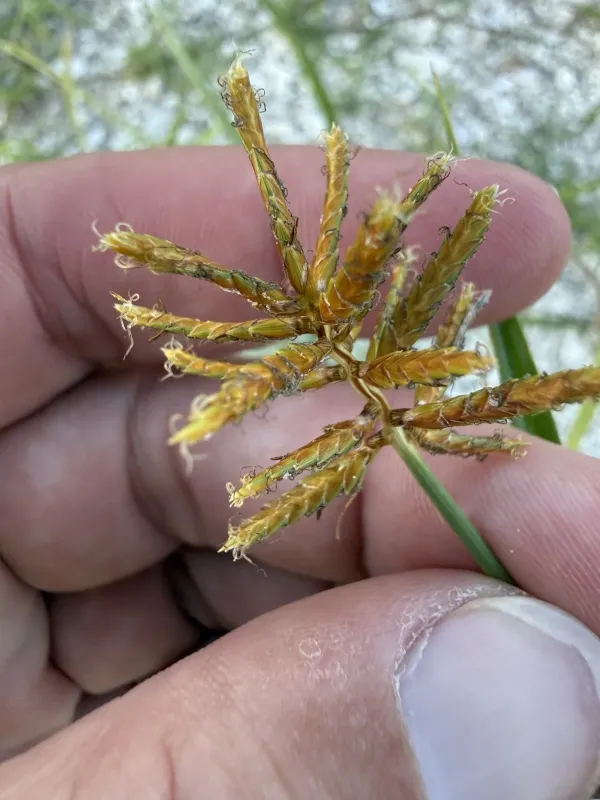
Chufa (Cyperus esculentus L.) is a perennial herbaceous plant belonging to the Cyperaceae family, typically grown as an annual crop for its edible tubers, often referred to as tiger nuts. It originated in the Mediterranean and Africa, where it has been cultivated for centuries.
Sowing should take place in spring once the soil temperature consistently reaches 12–15 degrees Celsius. In temperate climates, this usually occurs in May, as the plant is highly sensitive to frost and requires warmth to germinate.
To improve germination rates, it is recommended to soak the tubers in warm water for 48 to 72 hours before planting. This softens the outer skin and triggers the initial growth process.
Planting is performed in rows spaced 40–50 centimeters apart, with individual tubers placed 20–25 centimeters apart within the row. A planting depth of 5–7 centimeters is considered ideal for consistent soil moisture and temperature.
After emergence, it is vital to keep the field free of weeds, as chufa is a poor competitor in its early stages of growth. Mechanical weeding and hilling can help support the development of the tuber-forming stolons.
Growing requirements
Chufa thrives in light, fertile sandy-loam soils. The soil structure must remain loose to allow the tubers to expand and grow without physical resistance, which is essential for uniform tuber size.
The plant is highly photophilous and demands full sun exposure throughout the day. Shaded areas significantly reduce the photosynthetic capacity, leading to underdeveloped tubers and poor overall harvest.
Water requirements are significant during the peak growing season, particularly when the stolons begin to swell into tubers. However, the soil must be well-drained, as waterlogging can cause rot.
Optimal growth occurs at temperatures ranging between 20 and 25 degrees Celsius. While it can withstand high heat, prolonged cold spells will arrest growth and may significantly diminish the final yields.
Organic matter, such as well-rotted compost, should be incorporated into the soil before planting. Potassium-rich fertilizers are particularly beneficial for improving tuber fat content and quality.
Yield
The average yield of chufa varies widely based on climate and agricultural management, typically ranging from 5 to 10 metric tons per hectare under commercial conditions.
Under ideal cultivation practices, a single plant can produce between 50 and 300 tubers. The number of tubers is determined by soil fertility, plant spacing, and the length of the frost-free season.
Proper density management is crucial; too much crowding leads to competition for nutrients, resulting in smaller, less marketable tubers. Adequate spacing ensures that each plant has enough energy to develop a robust root system.
The duration of the growing season directly impacts the total harvest volume. In regions with longer summers, the tubers have more time to accumulate starch and fats, increasing the total weight per plant.
Strategic irrigation schedules during the tuber-bulking phase are the most effective way to maximize yield potential and ensure high-quality, plump harvests.
Main diseases and pests
Chufa is generally a hardy crop, but it is susceptible to various fungal diseases if soil moisture remains excessively high for extended periods, leading to root and tuber rot.
Wireworms (larvae of click beetles) are the primary soil-dwelling pest that can cause significant damage by boring into the developing tubers, which ruins their market value.
In hot and dry conditions, aphids may colonize the foliage, draining the plant of vital sap. While this rarely kills the plant, heavy infestations can reduce its overall productivity.
Disease management relies primarily on crop rotation and the use of certified, disease-free planting material. Avoiding sites previously infested with Cyperus weeds is critical to prevent pathogen transmission.
Integrated pest management, including monitoring and timely intervention, is recommended to keep pest populations below economic damage thresholds during the growing season.
Harvesting
The harvest period begins in late autumn when the foliage starts to turn yellow and wither. This indicates that the plant has ceased active growth and the tubers have reached maturity.
Harvesting is usually done by lifting the plants with a spade or a potato harvester. Care must be taken to minimize bruising, as injured tubers are prone to rapid decay during storage.
Post-harvest, the tubers must be washed thoroughly and spread out in a well-ventilated, shaded area for curing. This drying process is essential to reduce moisture content and prevent microbial growth.
During the drying phase, the tubers shrink and develop their characteristic wrinkled appearance. Once fully cured, they become hard and shelf-stable if kept in the right conditions.
Storage should take place in a cool, dry, and dark environment with good airflow. Under these conditions, the tubers can be kept for several months while maintaining their nutritional integrity.