
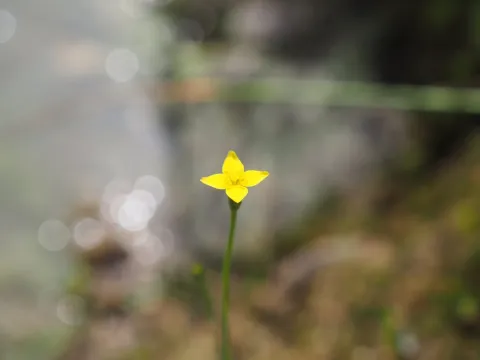
Cicendia
Cicendia
Cicendia is a genus of small, annual herbaceous plants belonging to the Gentianaceae family. These plants are known for their delicate appearance, typically characterized by slender stems and narrow, linear leaves arranged in opposite pairs along the stalk.
What the section contains

Cicendia
The botanical structure of Cicendia includes actinomorphic, solitary flowers, which are most commonly yellow or creamy in color. The genus is notable for its modest size, often reaching only a few centimeters in height, which allows it to thrive in open, specialized environments.
The natural range of Cicendia spans regions across Europe and North Africa. It is adapted to moist, sandy, or muddy habitats, including riverbanks, wet heaths, and shallow depressions where the soil remains hydrated but receives sufficient sunlight throughout the growing season.
Cultivation requirements for this genus focus on maintaining consistent soil moisture and providing a competition-free environment. Cicendia thrives best in neutral to slightly acidic soils that allow for good light penetration, as the plant does not tolerate being shaded by larger vegetation.
Regarding its utility, Cicendia does not have significant agricultural applications in terms of food or industrial production. However, it serves as an important indicator species in ecological studies, representing the health and biodiversity of wet meadow ecosystems and specialized natural habitats.
The primary threats to the survival of Cicendia are human-induced changes to the environment, particularly the drainage of wetlands and the destruction of natural water-logged areas. These activities rapidly eliminate the specific conditions necessary for its germination and growth.
Pests that might affect the plant include small sap-sucking insects like aphids, which can compromise the plant during its brief annual growing cycle. Damage is often exacerbated if the plant is stressed by suboptimal light or extreme temperature shifts.
Diseases such as root rot or fungal leaf spots can occur when the drainage is insufficient, leading to stagnant water and poor aeration. These issues are most prevalent in captive or poorly managed botanical environments where the natural balance is disturbed.
Invasive plant species pose a major competitive threat, as they quickly overgrow the small, slow-growing Cicendia specimens, preventing them from receiving the necessary solar radiation to mature and produce seeds.
Conservation efforts for this genus must prioritize the protection of pristine wetland habitats and the prevention of chemical runoff, which can alter the delicate soil chemistry upon which these plants depend.