
Bottle Gentian
Gentiana andrewsii
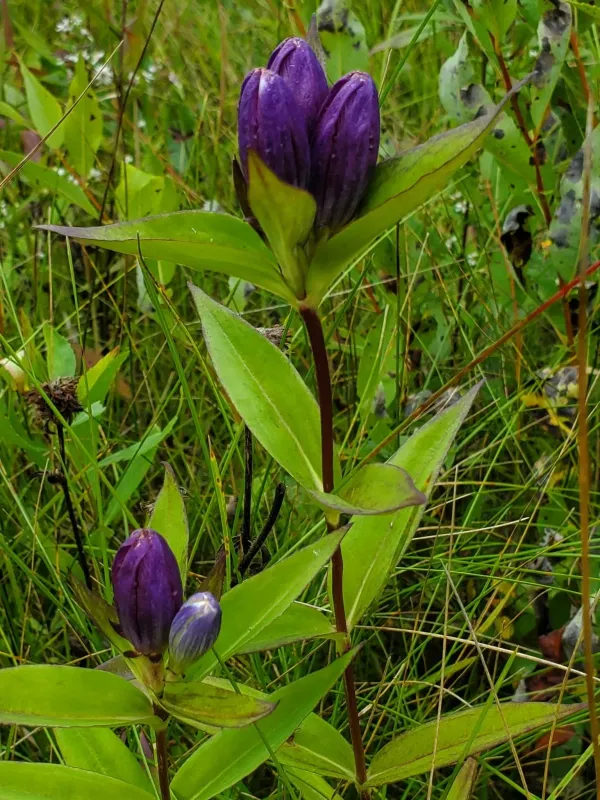
Description
Sowing dates
Seeds of Gentiana andrewsii require a period of cold stratification for 6 to 8 weeks to break dormancy and ensure successful germination.
Direct sowing in the garden is best performed in late autumn, allowing natural winter temperatures to trigger the germination process for spring.
When starting indoors, seeds should be surface-sown on moist seed-starting mix and exposed to light, as darkness can inhibit the germination process.
Maintaining a consistent temperature of around 15–18°C is crucial during the initial stages of seedling development in a controlled environment.
Seedlings should be hardened off before transplanting into permanent locations to ensure they can withstand fluctuations in outdoor conditions.
Growing requirements
The Bottle Gentian belongs to the Gentianaceae family and is highly valued for its unique closed-flower structure that resembles a closed bottle.
This species thrives in locations with rich, moist, loamy soils that possess a slightly acidic to neutral pH level for optimal growth.
While the plant can tolerate partial shade, it performs best in environments that provide consistent moisture throughout the active growing season.
Proper drainage is essential to prevent waterlogging, which the plant is highly sensitive to, despite its preference for moist habitats.
Adding organic mulch around the base of the plant helps retain soil moisture and creates a more stable thermal environment for the root system.
Main diseases and pests
Slugs and snails are the most common pests, as they are attracted to the succulent foliage and can significantly damage the plants overnight.
Fungal diseases, including powdery mildew and leaf spot, may occur if the plants are crowded and lack sufficient air circulation in humid conditions.
Aphids can cause damage to the flower buds, necessitating careful monitoring and prompt intervention with insecticidal soaps or biological controls.
Root rot is a major threat in poorly drained soils, usually caused by overwatering or the accumulation of moisture during dormant winter months.
Maintaining proper plant spacing and ensuring good airflow are key preventive measures against most common pathological issues affecting this culture.
Harvesting
Bottle Gentian is primarily utilized in horticultural landscaping, particularly for moist borders, rain gardens, or native plant restoration projects.
For floral arrangements, stems should be harvested when the flower buds are well-developed and plump, ensuring a longer vase life for the cut flowers.
Seed collection is performed by harvesting the capsules just before they fully dry and shatter, ensuring high-quality seeds for future propagation.
Post-harvest, seeds must be cleaned of debris and stored in breathable containers in a cool, dark, and dry environment to maintain viability.
Management of the plant after flowering involves cutting back spent stems to tidy the garden and prevent potential disease build-up in dead tissue.