
Yellow centaury
Cicendia filiformis
Description
Growing requirements
Yellow centaury (Cicendia filiformis) is a diminutive annual plant belonging to the Gentianaceae family. It is a wild species of significant botanical interest, although it lacks any formal role in agricultural production or industrial crop systems.
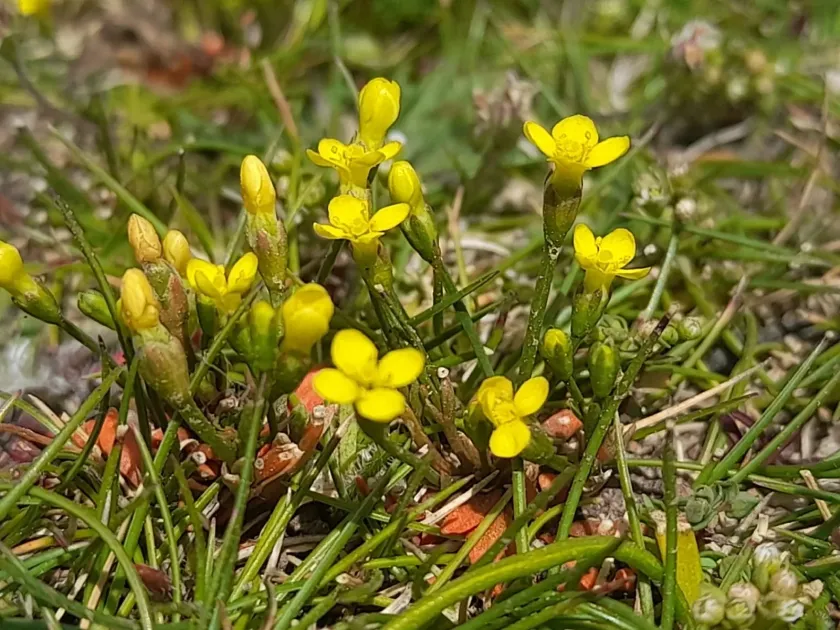
The plant is characterized by its very small stature, typically reaching only a few centimeters in height. Its thread-like stems and small, vibrant yellow flowers are adapted to survive in open, damp landscapes where competition from larger plants is minimal.
In terms of habitat requirements, the species thrives in wet, sandy, or silty soils. It is commonly found in areas such as seasonal pools, damp heathlands, and muddy trackways where the substrate remains moisture-retentive but not permanently submerged.
Climatically, it prefers regions influenced by Atlantic weather patterns, characterized by mild temperatures and consistent moisture availability. It is highly sensitive to habitat alteration and requires specific environmental conditions to complete its life cycle.
From an ecological perspective, Cicendia filiformis serves as an indicator species for specific, low-nutrient, and undisturbed wet environments. As a rare plant, it is largely the subject of conservation efforts rather than agricultural exploitation, with no specific agronomic yield or pest management data available.