
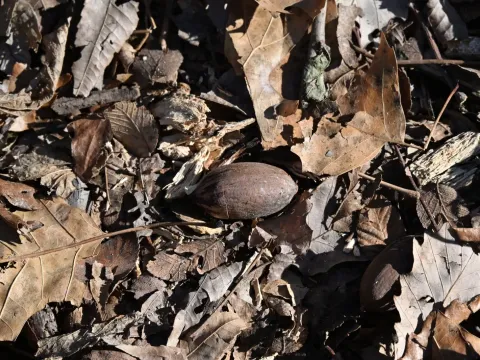
Hickory
Carya
The propagation of Carya species is primarily achieved through planting stratified seeds or by grafting elite scions onto rootstocks. Seed stratification is a mandatory process, requiring cold treatment for several months to break dormancy and ensure successful germination in the spring.
What the section contains
 Bitternut hickory
Carya cordiformis
Bitternut hickory
Carya cordiformis
 Black hickory
Carya texana
Brown hickory
Carya brownii
Black hickory
Carya texana
Brown hickory
Carya brownii
 Carya lecontei
Carya lecontei
Carya lecontei
 Carya leiodermis
Carya leiodermis
Carya leiodermis
 Carya ovalis
Carya ovalis
Carya ovalis
 Chinese hickory
Carya cathayensis
Laney hickory
Carya laneyi
Chinese hickory
Carya cathayensis
Laney hickory
Carya laneyi
 Nutmeg hickory
Carya myristiciformis
Nutmeg hickory
Carya myristiciformis
 Sand hickory
Carya pallida
Sand hickory
Carya pallida
 Scrub hickory
Carya floridana
Scrub hickory
Carya floridana
 Shellbark hickory
Carya laciniosa
Shellbark hickory
Carya laciniosa
 Water hickory
Carya aquatica
Water hickory
Carya aquatica
Hickory
Seeds are sown in early spring once the soil temperature is sufficiently warm. They should be planted at a depth of 5 to 8 centimeters, which provides adequate protection against predators and desiccation while allowing for robust sprout development in nutrient-rich soil.
Grafting is the preferred method for commercial orchards as it ensures true-to-type reproduction, maintaining specific nut quality and yield potential. This process is typically performed in late winter or early spring just as the sap begins to flow in the rootstock.
Young saplings require intensive care, including regular irrigation and consistent weed control. Competition from weeds and grasses can severely limit the growth of young trees, so maintaining a clean mulch ring around the base is essential for their establishment.
When establishing an orchard, trees should be spaced roughly 10 to 12 meters apart. This spacing is vital for long-term health, allowing the canopy to spread fully and ensuring that sunlight reaches all branches, which is critical for future nut production.
Hickory trees, belonging to the Juglandaceae family, are known for their preference for deep, fertile, and well-drained alluvial soils. They thrive in environments where they can access deep-soil moisture without being subject to waterlogging, which often leads to root health issues.
Climate is a determining factor for success, as most Carya species require long, warm growing seasons to properly mature their nuts. Selecting a site with full sun exposure is mandatory, as shaded trees exhibit reduced vigor and lower nut yields over their lifespan.
Soil fertility management involves regular testing to ensure the presence of adequate macronutrients and trace minerals. While they are hardy trees, optimizing soil pH and nutrient levels significantly enhances the speed of maturity and the consistency of annual yields.
Wind protection is an important consideration in open field plantings. Young trees may suffer from branch breakage or leaning if exposed to constant, high-velocity winds, so planting in sheltered locations or using protective windbreaks can mitigate these risks.
Temperature resilience varies by species; however, most cultivars require a sufficient number of chilling hours during the winter to trigger proper budding. Agronomists must align species selection with the local climate to prevent frost damage to tender shoots.
The path to a mature harvest is long, with seedling trees often taking a decade or more to begin producing fruit. Grafted varieties drastically reduce this waiting period, typically offering the first yields within 4 to 6 years of orchard establishment.
As the tree matures, its yield capacity increases significantly, reaching peak production levels in its second and third decades. Managing the biennial bearing tendency is a key task for growers, often achieved through strategic pruning and balanced fertilization programs.
Nut products from Carya are highly valued for their nutritional profile, containing healthy fats and essential proteins. This makes them a premium crop in both local markets and industrial food processing, where demand for high-quality nuts remains consistently high.
Beyond the nuts, hickory wood is renowned globally for its extreme density, strength, and shock resistance. It is highly sought after for the production of heavy-duty tool handles, sporting equipment, and high-quality furniture, providing a dual revenue stream for growers.
Regular pruning is not only essential for harvest accessibility but also for maintaining tree health. By removing dead wood and thinning the canopy, growers ensure that resources are directed toward productive limbs and improve overall light penetration.
The pecan weevil is perhaps the most destructive pest affecting Carya, targeting the developing nuts and potentially ruining a significant portion of the crop. Integrated pest management, involving monitoring and timely insecticide application, is critical for survival.
Fungal diseases, such as leaf scab, can significantly degrade the tree's health and reduce nut quality. These pathogens thrive in humid conditions, making proper canopy management and airflow essential for reducing the prevalence of fungal spores in the orchard.
Root rots caused by various soil-borne pathogens are a major threat, particularly in poorly drained soils. Preventing these diseases requires careful site selection and the avoidance of irrigation practices that create stagnant water conditions around the trunk.
Sanitation is a cornerstone of disease control. Growers are advised to remove and destroy all fallen leaves and mummified nuts after harvest to prevent the overwintering of pests and fungi, which would otherwise threaten the following season's crop.
- Regular orchard scouting.
- Dormant season sanitation.
- Fungicide applications during high humidity.
- Monitoring soil moisture to prevent root issues.
Harvest occurs in the autumn once the shucks begin to split naturally on the tree. This is a clear indicator of physiological maturity, and the harvest must be completed efficiently to prevent the nuts from becoming damaged by soil moisture or fungal growth.
In large-scale operations, mechanical shakers are used to vibrate the tree trunks, causing the ripe nuts to fall onto prepared catch frames or directly onto the orchard floor for rapid collection by sweepers.
Post-harvest processing involves immediate cleaning of the nuts to remove remaining shuck debris. Drying is the next essential step, reducing the moisture content of the kernels to prevent spoilage and ensure stability for long-term storage.
Climate-controlled storage is necessary to preserve the flavor and oil quality of the nuts. If stored improperly, the high-fat content of the kernels can become rancid, significantly lowering their market value and suitability for culinary applications.
Quality control during the harvest stage includes sizing and sorting, which ensures that each batch meets industrial standards. By separating nuts by size, producers can better satisfy specific market requirements and optimize their shipping and packaging processes.