
Black hickory
Carya texana
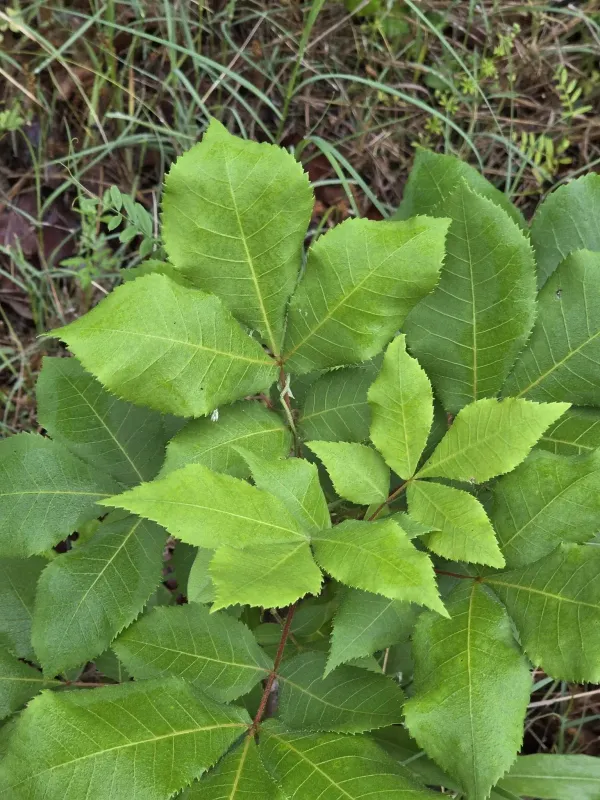
Description
Growing requirements
Black hickory (Carya texana) is a member of the Juglandaceae family. This deciduous tree is native to the southern and central United States, typically found in dry, rocky, or sandy upland habitats.
The tree thrives in well-drained soils, showing a remarkable ability to survive on sites with low nutrient availability. It prefers slightly acidic to neutral soil conditions, which are common in its natural range.
Light requirements for black hickory are high. For successful growth and crown development, the tree needs a location with full solar exposure throughout the day, avoiding shaded areas.
Climatically, it is a hardy species capable of enduring varied temperature ranges. However, it performs best in regions with distinct growing seasons where late spring frosts do not damage the early vegetative buds.
When establishing a plantation, providing sufficient spacing is crucial. A distance of 8 to 12 meters between trees allows for the development of a strong, healthy canopy and prevents resource competition.
Yield
The yield potential of Carya texana is moderate. Being a nut-bearing tree, it takes several years to reach maturity, with significant production typically starting after a decade or more of growth.
The nuts are characterized by a thick husk and hard shell. While they are a valuable source of wildlife food, their commercial use often focuses on genetic improvements for better cracking quality.
Beyond nut production, the timber of black hickory is highly regarded. Its wood is extremely dense, hard, and resilient, making it a preferred material for tool handles, furniture, and high-quality firewood.
In forestry, the species is valued for its environmental stability. It contributes to ecosystem health by providing a sustainable food source for local wildlife, including squirrels and various bird species.
As a resource, black hickory is often integrated into mixed-stand silviculture, where its ability to thrive in poor soils complements other timber species that require more fertile conditions.
Main diseases and pests
Common pests include the hickory nut curculio, which can significantly affect nut production. Integrated pest management strategies are essential to keep populations below economic injury levels.
Fungal diseases like leaf spot and scab may occur under conditions of high humidity or poor air circulation. Proper pruning is necessary to maintain an open canopy and promote rapid drying after rainfall.
Nutrient deficiencies, particularly zinc, are common in soils with higher pH levels. This can lead to yellowing leaves and reduced tree vigor, which necessitates periodic foliar supplementation.
Young trees are vulnerable to girdling by rodents and browsing by deer. Installing physical barriers around the base of the trunk during the establishment phase is highly recommended.
Despite these threats, black hickory is a robust species. With proactive monitoring and a focus on site-specific management, the risks to tree health can be effectively minimized.
Harvesting
Harvesting of black hickory nuts is typically performed in late autumn as the fruit reaches maturity and naturally falls to the ground.
Mechanical harvesting is common in commercial settings. Tree shakers are used to expedite the process, allowing for efficient collection before the nuts are damaged by ground moisture.
Once collected, the husks must be removed promptly. This step is critical to ensure the quality of the kernel and prevent premature spoilage or mold development.
The drying process is a vital stage in post-harvest management. Nuts should be kept in well-ventilated conditions until the internal moisture reaches a safe, stable level for long-term storage.
Properly cured nuts have a long shelf life. They should be stored in cool, dry environments to prevent the oils within the kernel from turning rancid, preserving their quality for later use.