
Shellbark hickory
Carya laciniosa
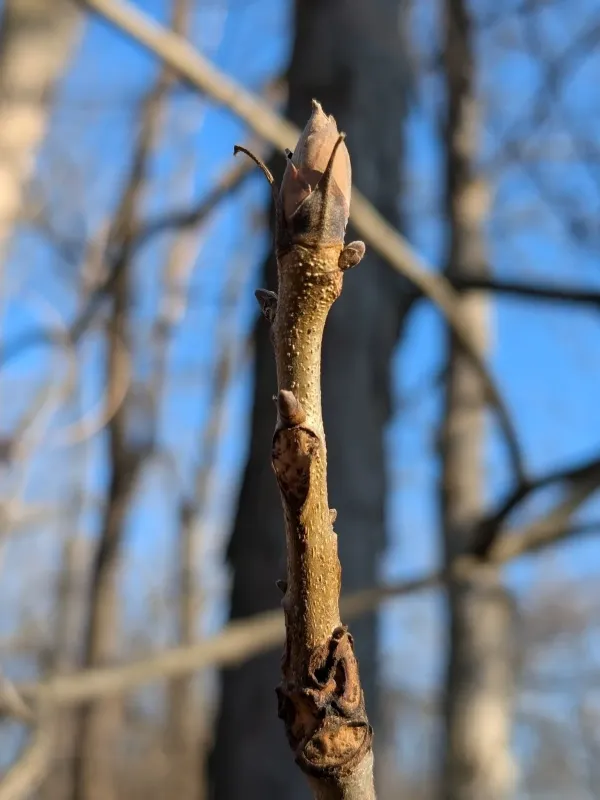
Description
Growing requirements
Shellbark hickory (Carya laciniosa) is a distinguished member of the Juglandaceae family, widely recognized for its robust growth and the thick, shaggy plates of bark on its trunk. This deciduous tree can reach impressive heights, often exceeding 30 meters in optimal environments.
The native habitat of this species is centered in the fertile, bottomland forests of the eastern United States. It flourishes in deep, moist, and nutrient-rich soils, typically found along riverbanks and floodplains where drainage is adequate but moisture remains constant.
Successful cultivation requires selecting sites that mimic its natural habitat. It performs best in soils with a neutral or slightly acidic pH, and while it is cold-hardy, the tree demands a relatively long, warm growing season to fully mature its heavy, thick-shelled nuts.
Botanically, the species is defined by its large pinnately compound leaves and the largest nuts of all the hickory species. These nuts are enclosed in a thick husk that remains intact even after the fruit matures and falls to the forest floor.
Agronomic management involves periodic monitoring of soil moisture levels, especially during the establishment phase, as the tree exhibits low tolerance for severe drought conditions. Proper spacing is essential to minimize competition for light and nutrients.
Yield
The economic value of shellbark hickory lies primarily in its high-quality, flavorful nut kernels, which are rich in healthy fats and proteins. While the shell is famously thick and difficult to crack, the flavor is highly regarded in culinary applications.
Beyond nut production, the timber of this species is highly valued in the wood industry. Known for its exceptional density, strength, and shock resistance, it is a preferred material for high-end tool handles, athletic equipment, and fine furniture.
In landscaping and urban forestry, the shellbark hickory is used for its ornamental beauty and deep, cooling shade. It is considered an excellent choice for spacious parks and large garden settings where its unique bark structure can be fully appreciated.
Yields tend to be cyclical, varying from year to year based on weather patterns and pollination efficacy. Growers can expect a long-term investment, as the tree requires several decades to reach peak fruit-bearing maturity.
Ecologically, the tree is a keystone species in its environment, providing a critical food source for various wildlife, including squirrels and other small mammals, which facilitates seed dispersal throughout the local ecosystem.
Main diseases and pests
Common health issues for shellbark hickory include fungal leaf spots and cankers, which are often exacerbated by poor air circulation or extended periods of high humidity. Regular canopy management can help mitigate these risks.
Pest pressures primarily come from nut weevils and certain species of wood-boring insects. Implementing integrated pest management strategies, such as maintaining healthy tree vigor and removing fallen debris, is essential for orchard protection.
Root system health is vital; the species is sensitive to waterlogged soils which can lead to crown rot. Installing proper drainage systems in orchard planning is the most effective way to prevent long-term soil-related disease issues.
Proper pruning practices should be utilized to eliminate crossing or diseased branches. This not only improves the structural integrity of the tree but also enhances light penetration to the inner branches.
For large-scale cultivation, growers should prioritize the use of high-quality, disease-resistant nursery stock to ensure the longevity of the orchard and maximize the overall yield potential over the lifespan of the plantation.