
Chinese hickory
Carya cathayensis
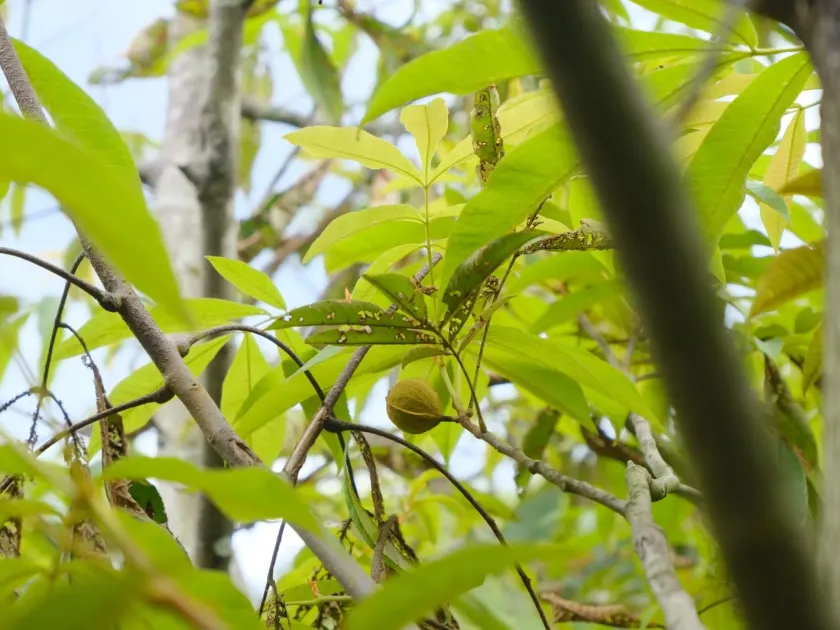
Description
Sowing dates
Propagation of Chinese hickory is primarily achieved through seeds or grafting superior cultivars onto rootstocks. Seeds should be sown in autumn or early spring, following a mandatory stratification period of 60 to 90 days in cool, moist conditions to ensure optimal germination rates.
When transplanting young trees to their permanent location, deep planting holes are necessary to accommodate the vigorous taproot system. A spacing of at least 8 to 10 meters between trees is required to ensure sufficient canopy space and adequate sunlight exposure.
Selecting a site with superior drainage is crucial for success, as waterlogging is highly detrimental to the root health of young hickory saplings. Planting is best performed during the tree's dormancy period, either in late autumn or early spring before the buds break.
Utilizing container-grown saplings with a well-developed root system significantly improves establishment rates in new growing regions. Proper placement of the root collar at the soil surface level is essential to prevent future stem rot and promote balanced development.
During the first few years, regular irrigation is vital until the tree's root system becomes fully established. Maintaining soil moisture during critical growth stages will prevent physiological stress and promote more uniform tree development.
Growing requirements
Chinese hickory, a member of the Juglandaceae family, is a deciduous tree reaching heights of up to 20 meters. It thrives in humid subtropical climates that experience consistent rainfall throughout the active growing season.
The crop demands fertile soil conditions, ideally preferring deep, well-drained loams with a neutral to slightly acidic pH level. Sites with heavy clay or poor water infiltration are unsuitable for commercial hickory production and often lead to poor tree vigor.
The tree is sensitive to significant winter temperature fluctuations and late spring frosts, which may damage the developing flower buds. The ideal mean annual temperature for optimal nut yields ranges between 15 and 20 degrees Celsius.
High levels of solar radiation are necessary for high-quality nut production. Growers should ensure that orchards are located in open, sunny areas, as excessive shading can lead to reduced fruit set and poor growth rates.
Standard agronomic practice includes balanced fertilization with nitrogen, phosphorus, and potassium to support vegetative growth. Mulching around the base of the tree with organic matter helps conserve moisture and prevents weeds from competing with the young trees.
Yield
The fruit of the Chinese hickory is a small nut enclosed in a strong shell. The primary agricultural value lies in the nutrient-dense kernels, which are highly prized for their content of healthy fatty acids and proteins.
Commercial yields are dependent on tree age, site quality, and the level of management. Trees typically begin to produce viable harvests between 7 to 10 years after planting, with peak production occurring after 20 years of age.
These nuts are widely utilized in the food processing industry for baking and confectionery products due to their rich, pleasant flavor. Furthermore, the hardwood of the hickory tree is commercially significant for its durability and strength.
High oil content in the kernels makes the production of specialty nut oils a profitable avenue for growers. These oils are finding increasing demand in both the culinary sector and the luxury cosmetic industry.
Strategic pruning is essential to maintain tree shape and sunlight penetration. This practice not only improves the overall yield but also facilitates easier mechanical harvesting and disease management within the orchard.
Main diseases and pests
The hickory shuckworm is a major pest that targets developing nuts, often leading to substantial crop losses if left unmanaged. Aphids and various mite species can also cause significant damage to foliage during periods of dry, hot weather.
Fungal diseases like scab and powdery mildew represent constant threats, especially in humid conditions with poor air circulation. These pathogens can cause premature leaf drop and reduce the tree's ability to store energy for the following season.
Root rot, often caused by poorly drained soils or over-irrigation, is a critical threat that can kill mature trees. Because treatment options for root pathogens are limited, prevention through site selection remains the most effective strategy.
- Regular inspection and removal of infected branches.
- Application of targeted fungicides during wet periods.
- Integrated pest management using appropriate insecticides during infestation cycles.
Monitoring the orchard regularly throughout the summer season allows for early detection of potential disease outbreaks, enabling prompt intervention before the pathogen spreads across the plantation.
Harvesting
Harvesting takes place in autumn when the outer husk begins to dry and crack naturally. Prompt collection is essential, as prolonged exposure to moist ground conditions can rapidly degrade nut quality and encourage mold growth.
Mechanized harvesting involving mechanical trunk shakers is the standard for large-scale operations. This method efficiently drops the nuts onto collection nets, significantly reducing the labor required during the peak harvest time.
Post-harvest processing involves removing the husks and drying the nuts in ventilated areas to reach an equilibrium moisture content of 8–10 percent. Proper drying is a fundamental step to prevent spoilage and ensure a long storage life.
Storage should occur in cool, dry facilities to maintain kernel freshness and prevent fats from going rancid. Keeping the nuts in their shells provides a natural barrier that preserves quality far better than storage in a shelled state.
Grading and sorting by size and kernel percentage allow growers to maximize revenue. Establishing a consistent quality control process after harvest is the key to successfully marketing the product to industrial processors.