
Argyrodendron
Argyrodendron
Argyrodendron is a genus of large, evergreen trees within the Malvaceae family. Native primarily to the rainforests of Australia, these trees are recognized as significant components of tropical ecosystems, growing in areas with high biological productivity and rainfall.
What the section contains


Argyrodendron
The plant requires a strictly tropical climate to flourish, characterized by consistent warmth throughout the year. It has no tolerance for frost, and successful growth depends on stable atmospheric conditions, which limits the potential cultivation areas to equatorial or coastal tropical zones.
Optimal soil conditions for Argyrodendron include deep, well-draining, and nutrient-rich substrates. The trees perform best on loamy soils where the roots can extend deeply without encountering compacted layers, ensuring both stability and sufficient nutrient uptake for rapid biomass accumulation.
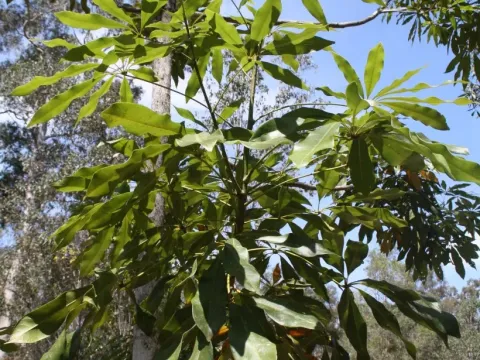
Botanically, the trees are known for their massive buttress roots, which provide mechanical support for their large trunks. The foliage is complex, featuring palmate leaves with a distinct silvery underside, a trait that serves as a key identifying feature of the genus in field surveys.
The economic value of Argyrodendron is primarily centered on its high-quality timber. Known for its strength and appealing grain patterns, the wood is utilized in fine woodworking, flooring, and heavy-duty construction. Sustainable management of these stands is critical for industrial output.
Common phytopathological issues include root rot infections triggered by poor soil aeration or excessive moisture accumulation. Such diseases often impede the growth of young trees and can lead to significant losses in plantation settings.
Pest pressures are usually managed through integrated pest control. Wood-boring insects present the most serious threat to the timber quality, requiring regular monitoring and strict forest hygiene practices to prevent massive infestations in dense tree populations.