

Description
How to identify
The cherry slug sawfly, scientifically known as Eriocampa limacina, is a member of the Tenthredinidae family. The adult insect is a small wasp, typically measuring about 6 mm in length, with a glossy black body and transparent wings.
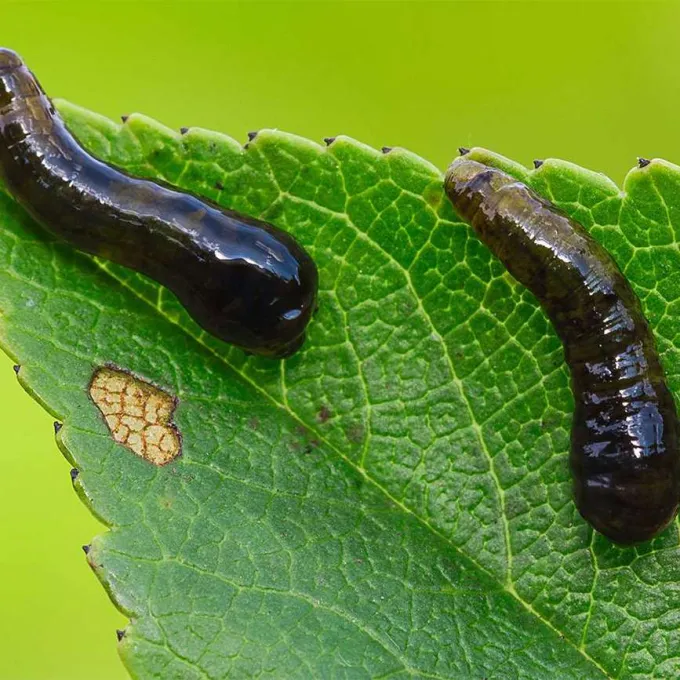
The larvae are distinct because of their slimy appearance, resembling tiny slugs or leeches. They are olive-green or blackish in color, with a swollen thoracic region, and are covered in a layer of sticky mucus secreted from their body.
They overwinter as larvae in cocoons located in the soil, usually at a depth of 5 to 15 centimeters. Pupation occurs in the soil in the spring, followed by the emergence of adult sawflies that initiate the breeding cycle.
Reproduction is largely parthenogenic, meaning females can lay eggs without fertilization. This reproductive strategy allows populations to explode in size very quickly within a single growing season.
Depending on local climate conditions, the insect completes two generations per year. The first generation emerges in late spring, while the second appears during mid-summer, causing prolonged damage throughout the season.
What it damages
The cherry slug sawfly primarily attacks fruit trees belonging to the Rosaceae family. Its preferred hosts include cherry, sweet cherry, plum, pear, quince, and occasionally hawthorn.
The larvae feed on the leaf surface, scraping away the parenchymal tissue while leaving the leaf veins intact. This process creates a skeletonized leaf structure that eventually dries up and turns brown.
Severe infestations severely reduce the photosynthetic capacity of the tree. This leads to weakened growth, decreased winter hardiness, and lower fruit production in subsequent years.
Young trees in nurseries are particularly vulnerable to this pest. If the infestation is left uncontrolled, the larvae can defoliate entire young trees, which often leads to the death of the sapling.
The aesthetic and commercial value of the crop is significantly reduced when trees are heavily infested, as the lack of healthy foliage prevents the fruit from developing properly and accumulating sugars.
Signs of infestation
The first indicator of an infestation is the appearance of light-colored, translucent patches on the upper surface of the leaves, resulting from the larvae feeding on the opposite side.
A clear visual sign is the presence of the slimy, slug-like larvae crawling slowly across the foliage. Their mucus-covered bodies make them very easy to distinguish from other types of caterpillars.
Heavily affected leaves lose their green color, curl, and turn brown. Eventually, the damaged foliage drops prematurely, giving the tree a scorched or sickly appearance in mid-summer.
Excrement from the larvae, which looks like small, dark, granular spots on the leaf surface, is another common sign of their activity and can lead to the development of sooty mold.
During a heavy infestation, you might notice that the tree crown looks much sparser than normal, as the loss of damaged leaves occurs rapidly and sometimes happens in large quantities.
Control measures
Cultural control involves cultivating the soil around the base of the tree. This practice disturbs the pupae and overwintering larvae, exposing them to predators and harsh environmental conditions.
Removing fallen leaves and debris from the orchard floor can help reduce the population, as it minimizes the number of larvae that can successfully reach the soil to pupate.
Chemical control can be achieved through the application of contact and systemic insecticides. These should be timed to coincide with the peak hatching period of the larvae.
Biological alternatives, such as the use of botanical oils, insecticidal soaps, or products containing Bacillus thuringiensis, are effective for smaller gardens where chemical use is restricted.
Regular monitoring of the orchard is essential. By identifying early colonies of larvae, gardeners can spot-treat affected branches rather than spraying the entire tree, maintaining an ecological balance.
Content graph
Connections · Cherry slug sawfly
Most often together:
Marketplace
Products · 11




Biology
Taxonomy
- Latin name
- Eriocampa atripennis
- Order
- Hymenoptera
- Family
- Tenthredinidae
- EPPO code
- ERIAAT
Community
Discussion
No discussions yet — be the first.