
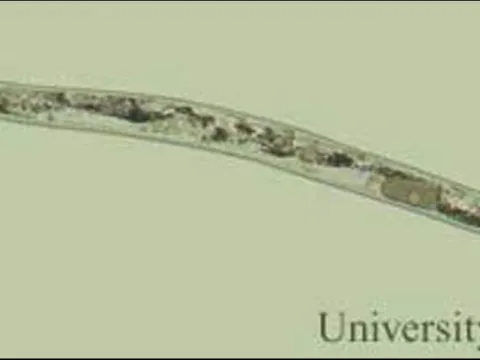
Trichodorus christiei
Trichodorus christiei
Trichodorus christiei (now identified as Paratrichodorus minor) is a soil-dwelling ectoparasitic nematode belonging to the family Trichodoridae. These organisms are microscopic and transparent, making them invisible to the naked eye in field conditions.
What the section contains
Trichodorus christiei
They possess a specialized feeding organ called an onchiostyle, which is a curved tooth-like structure. This allows the nematode to pierce the cell walls of plant roots and ingest the cytoplasm, causing significant cellular damage.
These nematodes thrive in sandy and coarse-textured soils, which provide the necessary pore spaces for their movement. Their biological cycle is rapid, allowing them to reproduce effectively when environmental conditions are optimal.
A critical aspect of this species is its role as an efficient vector for plant viruses, most notably the Tobacco Rattle Virus (TRV), which causes severe systemic disease in many vegetable crops.
The population density of this species can remain high for years, especially in fields with continuous monoculture practices, posing a constant threat to agricultural production.
The most recognizable symptom of Trichodorus christiei feeding is the "stubby root" condition. The nematodes feed on the root tips, which leads to the cessation of primary root growth and the development of short, stubby, and branched lateral roots.
This root deformation severely impairs the plant's ability to uptake water and nutrients, resulting in stunted growth, chlorosis, and wilting during periods of heat stress.
When the nematode transmits the Tobacco Rattle Virus, the damage extends to the edible parts of the crop. In potatoes, this results in "spraing" or internal necrotic lesions that render the tubers unmarketable.
Economic losses are cumulative, starting from reduced nutrient uptake and ending with total crop failure if the viral infection becomes widespread within the plant population.
The severity of damage is typically correlated with the number of nematodes present in the soil at the time of planting, making early detection crucial for management.
Activity levels are highly dependent on soil moisture and temperature. The nematodes are most active during the growing season when soil temperatures range between 15°C and 25°C.
They are particularly mobile in moist soil. Heavy rainfall or irrigation events often trigger waves of infection as the nematodes move easily through the water films surrounding soil particles.
As the season shifts to autumn and soil temperatures decrease, the nematodes move deeper into the soil profile to avoid freezing and to maintain metabolic functions in a semi-dormant state.
Spread across different fields occurs primarily through human activity, such as moving contaminated soil on tractors, plows, and other cultivation equipment.
The life cycle continues throughout the growing season, and multiple generations may be produced if the host plant provides continuous nutrition and the soil conditions are favorable.
In the field, symptoms appear as patches of stunted, poorly growing plants. These patches may expand over time as the nematode population spreads and moves toward healthy roots.
A closer inspection of the plant roots will reveal the characteristic symptoms: stunted, thickened root tips that lack the delicate root hairs essential for nutrient absorption.
Foliar symptoms associated with the transmitted viruses include mottling, chlorotic rings, and distorted leaves, which can often be mistaken for nutritional deficiencies.
For tuber crops, the primary sign of the associated virus is the presence of corky rings or dark necrotic spots found upon slicing the potato or carrot.
Diagnostic confirmation requires soil and root sampling sent to a nematology laboratory, as visual symptoms alone are often insufficient to distinguish between different nematode species.
Integrated Pest Management (IPM) is essential for controlling this nematode, as total eradication is rarely achievable. A focus on prevention and cultural practices is recommended.
- Practice strict sanitation by cleaning all farm machinery to prevent the transfer of infested soil between fields.
- Utilize crop rotation with non-host or antagonistic crops to reduce nematode populations over time.
- Ensure adequate fertilization and irrigation to help plants compensate for limited root growth.
- Consider the use of certified, clean planting material to prevent introducing the pest into new areas.
- Apply soil nematicides only when populations reach economic injury levels and where legal regulations permit.