
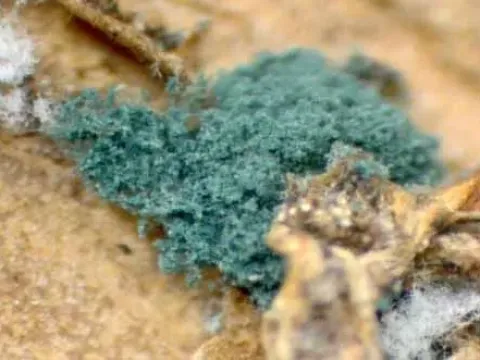
Trichoderma viride
Trichoderma viride
Trichoderma viride is an ascomycete fungus of the Trichoderma genus. While widely recognized in biotechnology as a beneficial agent, it can behave as a facultative parasite, causing diseases in weakened or stressed plant species.
What the section contains
Trichoderma viride
The fungus is characterized by rapid mycelial growth. It starts as white, fluffy colonies that quickly turn vibrant green due to the massive production of conidia. Microscopic examination of the branching conidiophores is essential for accurate identification.
Primarily a soil saprotroph, it gains pathogenic capabilities when it encounters compromised plant tissues. It produces a wide array of enzymes that degrade plant cell walls, leading to tissue decay.
The life cycle involves the dispersal of conidia via air currents, water splashes, and contaminated tools. It survives adverse conditions in the soil by forming resistant chlamydospores.
Distinguishing between beneficial and pathogenic strains is critical in agronomy, as some isolates can severely impact seedling survival if environmental conditions are conducive to fungal growth.
The primary targets for this fungus are seeds, seedlings, and root systems, particularly in vegetable production. It is a common cause of damping-off disease in greenhouses.
Tomato, cucumber, and pepper crops are highly susceptible. The fungus infects the roots, leading to root rot, which severely inhibits the plant's ability to absorb water and essential nutrients.
Seedlings affected by Trichoderma viride typically exhibit thinning at the base of the stem. This leads to the characteristic "damping-off," where young plants collapse and die within a few days.
In fruit crops, the pathogen can cause post-harvest fruit rot if storage conditions are too humid. This reduces marketability and storage longevity for crops like apples and pears.
Trees may also suffer from wood decay if they are already stressed by environmental factors, pests, or mechanical injury, allowing the fungus to establish itself in the woody tissues.
The peak activity of the fungus occurs in spring, especially when seeds are sown in cold, waterlogged soils. Excess moisture is the primary driver for spore germination and mycelial spread.
Optimal development occurs at temperatures ranging from +15°C to +25°C. In controlled greenhouse environments, the fungus can remain active throughout the year if ventilation is inadequate.
During autumn, the fungus colonizes plant debris remaining on the soil surface. This accumulation of inoculum serves as a reservoir for infection in the following growing season.
Heavy rainfall facilitates the spread of spores, as water splashes easily transfer the fungi from the soil to the lower leaves and stems of the plants.
Winter survival is ensured by the formation of chlamydospores, which remain dormant in the soil until the next favorable environmental cycle begins.
The most visible sign is the development of a white, spider-web-like mycelium on the soil surface or plant tissues, which eventually turns a distinct olive-green color.
Infected roots show signs of browning and softening. Plants become wilted even in the presence of sufficient soil moisture, indicating damage to the vascular system.
Seedlings often exhibit constriction at the root collar. This localized necrosis causes the plant to lose turgor pressure and fall over suddenly.
In fruits, soft rot spots appear rapidly. These spots often develop a pungent, musty odor and are eventually covered by a dense layer of green spores.
Internal tissue examination reveals discolored and decaying vascular bundles, confirming the colonization of the fungus within the plant's structural tissues.
Effective control starts with strict moisture management. Avoid over-watering and ensure that soil or growing media has excellent drainage to prevent stagnation.
Seed treatment with authorized fungicides is a standard preventive measure to protect seeds from soil-borne pathogens during the critical germination phase.
- Improve greenhouse ventilation to decrease humidity.
- Promptly remove and destroy infected plant materials.
- Implement crop rotation to disrupt the fungal life cycle.
- Use resistant cultivars when available.
Cultivation practices such as shallow tilling can help aerate the surface soil, increasing its drying rate and creating a less favorable environment for the pathogen.
Chemical control should be applied upon the first signs of infection, using targeted fungicides in accordance with local regulations and crop-specific guidelines.