
Tubakia dryina
Tubakia dryina
Tubakia dryina is a fungal pathogen belonging to the phylum Ascomycota. It is widely recognized as the causative agent of leaf spot diseases in various woody plant species, primarily affecting deciduous trees.
What the section contains
Tubakia dryina
The fungus produces structures known as acervuli or pycnidia, which rupture the plant epidermis to release conidia. These spores are the primary inoculum that spreads the infection across the host plant.
Taxonomically, the genus Tubakia has undergone revisions, with T. dryina serving as a complex of related species that exhibit significant morphological variability depending on the host and environment.
The pathogen completes its life cycle by over-wintering on fallen leaves, where it can survive as mycelium or through the formation of sexual fruiting bodies, ensuring survival until the next spring.
Laboratory diagnosis is often necessary to distinguish T. dryina from other leaf-spotting fungi, as symptoms are often visually similar to anthracnose or other common blight pathogens.
The host range of Tubakia dryina is extensive, including oak (Quercus), chestnut, maple, ash, and various other hardwoods. It frequently affects trees in urban landscapes, nurseries, and natural forests.
The fungus infects leaves, petioles, and occasionally shoots. By damaging the photosynthetic tissue, the pathogen reduces the tree's ability to produce energy, leading to decreased vigor and overall health.
Severe infections in nurseries are particularly problematic, as they can cause significant growth stunting and, in extreme cases, lead to the death of young, vulnerable saplings.
Mature trees usually tolerate the infection unless it occurs repeatedly over several consecutive years, which may then contribute to branch dieback and an increased susceptibility to secondary pests.
Defoliation caused by this pathogen can occur prematurely, usually in late summer, forcing the tree to expend energy reserves to produce new growth, which leaves it vulnerable during winter.
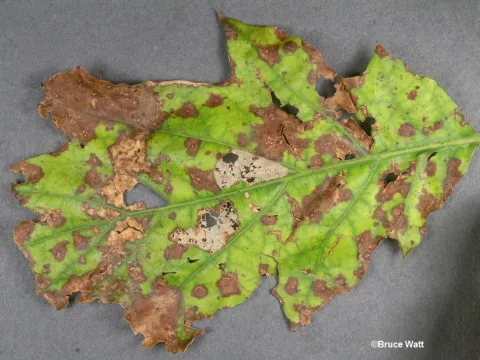
Symptoms initially appear as small, scattered chlorotic spots that eventually enlarge and transition to dark brown or reddish-black necrotic lesions, often with a yellow halo.
These spots frequently merge into larger dead areas, leading to leaf distortion, curling, and eventually premature abscission of the affected foliage from the branches.
Close inspection of the underside of the leaf, particularly in humid conditions, may reveal tiny, dark-colored fruiting bodies that indicate the sporulation of the fungus.
The infection typically progresses from the lower canopy upwards, as the splashing of rain and dew facilitates the upward movement of spores from the ground-level leaf litter.
In humid and temperate climates, the disease can spread rapidly, causing significant leaf drop that alters the aesthetic value of the tree and exposes its interior branches to excessive sun.
Sanitation is the most effective management strategy. Raking and removing fallen leaves during autumn is essential to eliminate the primary source of overwintering inoculum.
Cultural practices such as pruning to improve air circulation within the tree canopy help keep leaves drier, thereby reducing the risk of fungal spore germination and infection.
Fungicide applications using copper-based products or systemic fungicides (e.g., triazoles) can be effective when applied proactively at the onset of symptoms or during early bud break.
Ensuring that trees receive adequate water and nutrients helps maintain strong natural resistance, allowing the tree to better withstand and recover from fungal challenges.
When applying control measures, it is important to treat all affected parts of the canopy thoroughly, and repeat applications at regular intervals if weather conditions remain conducive to disease development.