
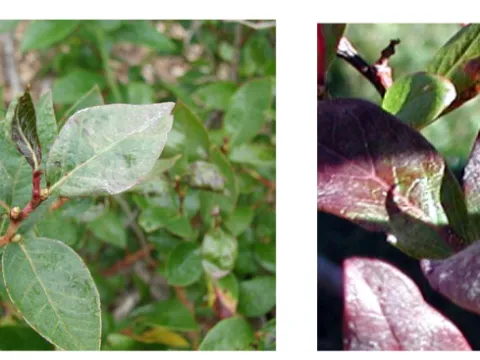
Powdery mildew of blueberry
Erysiphe vaccinii
Powdery mildew of blueberries is caused by the obligate fungal pathogen Erysiphe vaccinii. This fungus belongs to the kingdom Fungi, phylum Ascomycota, and is a major concern for growers of Vaccinium species, including blueberries and cranberries.
What the section contains
Powdery mildew of blueberry
The pathogen functions by developing haustoria that penetrate the epidermal cells of the host plant to absorb nutrients. Its life cycle involves the production of asexual conidia for rapid dispersal and sexual cleistothecia for overwintering.
Conidia are primarily dispersed by wind currents, which allows the fungus to spread quickly throughout a field during favorable environmental conditions. Moisture and moderate temperatures are key triggers for spore germination.
The fungus typically thrives in environments with poor air circulation and high humidity levels. Once a leaf is infected, the fungal mycelium spreads across the surface, consuming nutrients and weakening the plant's physiological structure.
The persistence of Erysiphe vaccinii in the field is ensured by its ability to survive in plant debris or on dormant stems, making sanitation a critical component of the disease cycle management.
Infection primarily affects foliage, young shoot tips, and occasionally developing fruit clusters. By interfering with the photosynthetic process, the fungus significantly reduces the plant's overall energy production and carbohydrate storage capacity.
As the infection progresses, severe damage results in premature defoliation, which leaves the blueberry bushes highly susceptible to cold injury during the winter months. This reduction in winter hardiness is a major cause of crop failure in subsequent years.
In cases of heavy infestation, the growth of shoots is stunted, and the overall plant vigor declines. This stunted growth decreases the amount of new fruiting wood available for the following season's yield.
Productivity is negatively impacted not only by direct damage to vegetative tissues but also by the cumulative stress on the plant. Weakened bushes are more prone to secondary bacterial or fungal infections.
Economic losses are associated with decreased yields, reduced fruit quality, and the necessity of recurring fungicide applications, which increase the overall cost of production for the grower.
The hallmark sign of powdery mildew is the appearance of white, powdery, mycelial growth on both the upper and lower surfaces of the leaves. This powdery coating is actually composed of fungal hyphae and conidia.
Over time, the white patches may turn grayish or brownish as the fungus matures. Leaves may show symptoms of chlorosis, curling, or distortion as the fungal colony continues to colonize the leaf tissue.
Young shoots infected by the fungus often show signs of twisting or stunted development. In severe cases, the infected tissue may become necrotic, resulting in brown, dead areas on the leaves or stems.
By late summer or autumn, small, black, spherical structures called cleistothecia often appear within the fungal mat. These represent the sexual stage of the pathogen and serve as a diagnostic feature for the end of the season.
Visible inspection is usually straightforward, as the powdery appearance is quite distinct from other leaf spot diseases that typically cause more defined, non-powdery lesions on the plant tissue.
Cultural control is essential and involves pruning away infected shoots and ensuring adequate plant spacing to promote airflow. Improving the microclimate within the canopy is one of the most effective ways to suppress fungal development.
Growers should avoid excessive nitrogen fertilization, as it stimulates succulent, rapid growth that is highly susceptible to infection. Maintaining a balanced nutrient program with appropriate levels of potassium and phosphorus is recommended.
Chemical control includes the application of systemic fungicides, such as triazoles or strobilurins, as well as sulfur-based contact treatments. These should be applied at the first signs of disease to be most effective.
Biological control options involve the use of beneficial fungi, such as Ampelomyces quisqualis, which can parasitize and suppress the growth of the powdery mildew fungus on the foliage.
- Regular monitoring of fields for early symptoms.
- Thorough removal and destruction of infected plant material.
- Use of disease-resistant varieties if available in the region.
- Sanitizing pruning tools to prevent spread between healthy bushes.