
Powdery mildew
Erysiphe necator
Description
How to identify
Powdery mildew of grapes is caused by the obligate fungal parasite Erysiphe necator. It is one of the most widespread and destructive diseases affecting viticulture globally, capable of infecting all green tissues of the vine.
The fungus overwinters as mycelium inside dormant buds or as cleistothecia (fruiting bodies) on the surface of the bark. In spring, spores are released and spread to susceptible tissue via wind and rain splashes.
Warm and humid conditions are ideal for the development of Erysiphe necator. Unlike downy mildew, this pathogen does not require free water on the leaf surface to germinate, making it a persistent threat in many climates.
Poor canopy management and restricted airflow significantly contribute to the rapid spread of the disease. Dense foliage prevents light penetration and creates microclimates favored by the fungus.
The infection cycle can repeat multiple times throughout the growing season, necessitating consistent monitoring and proactive treatment strategies to prevent severe outbreaks in the vineyard.
What it damages
The damage caused by powdery mildew affects the entire vine: leaves, shoots, inflorescences, and fruit clusters. Severe infestations result in significant yield losses and reduced fruit quality.
On leaves, the mildew causes chlorosis, curling, and eventually premature senescence. The fungal layer interferes with photosynthesis, which weakens the vine's overall vigor and capacity to store nutrients.
Inflorescence infection is particularly devastating, as it can lead to complete blossom drop. If the flowers are infected, they fail to develop into healthy berries, directly reducing the harvest volume.
Berries infected after fruit set often cease to grow properly and may split open due to the expansion pressure of healthy internal tissue against the damaged, hardened skin, exposing seeds.
Furthermore, the fruit acquires an unpleasant, musty flavor, which makes the crop unsuitable for high-quality wine production even if the fungal load is partially managed during the winemaking process.
Signs of infestation
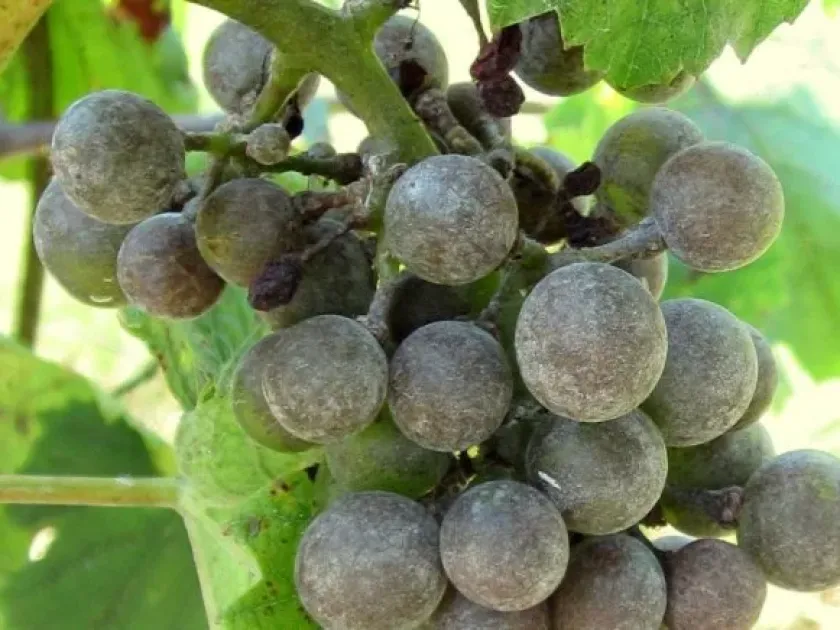
The primary symptom is a grayish-white, powdery mycelial growth on the surface of leaves, shoots, and young berries. This layer is easily identified as it looks like a dusting of flour.
On green shoots, the fungus leaves behind reddish-brown or black diffuse spots. These markings often remain visible on the canes even after they have fully matured and become woody in autumn.
Infected berries show a web-like appearance on the skin before turning dull and grayish. As the berries expand, the damaged skin cracks, creating an entry point for other pathogens and insects.
A distinct smell is often associated with heavy powdery mildew infections; it is frequently described as a moldy, damp, or fishy odor present in the air near the affected vines.
Early-stage infection on the underside of leaves may be subtle, appearing as a slight discoloration or a velvety texture before the characteristic white powder becomes evident.
Control measures
Control measures rely on a combination of cultural practices, such as canopy thinning and shoot positioning, along with the timely application of fungicides to manage the fungal population.
Cultural control is essential to improve airflow and increase the penetration of sunlight, which naturally inhibits fungal growth and improves the efficacy of applied chemical treatments.
- Preventative sulfur-based sprays throughout the growing season.
- Application of systemic fungicides during high-risk stages like flowering.
- Regular canopy maintenance to remove excessive vegetation and improve ventilation.
- Winter sanitation by pruning and destroying infected canes and debris.
Integrated Pest Management (IPM) programs emphasize the rotation of different classes of fungicides to prevent the pathogen from developing resistance, ensuring long-term disease control effectiveness.
Causes diseases · 1
Discussion
No discussions yet — be the first.