
Potato wart
Synchytrium endobioticum
Description
How to identify
The causative agent of potato wart disease is the chytrid fungus Synchytrium endobioticum. It is an obligate parasite belonging to the kingdom Fungi.
The pathogen does not form a true mycelium; instead, its vegetative body consists of a prosorus, which later develops into resting zoosporangia.
These resting spores are extremely resilient, capable of persisting in the soil for several decades even in the absence of a host plant.
The life cycle involves the release of motile zoospores that infect host plant cells, stimulating uncontrolled cell division and hypertrophy.
Because of its severe impact on crop yields and soil persistence, it is strictly regulated as a quarantine organism in most agricultural regions worldwide.
What it damages
The primary host is the potato (Solanum tuberosum). The pathogen attacks tubers, stolons, and the stem base, causing characteristic wart-like galls.
While potato is the main concern, the fungus can occasionally infect other solanaceous weeds, which may serve as minor reservoirs for the pathogen.
Root infection is rare because the pathogen requires meristematic tissues that are actively dividing during the tuber formation process.
The damage is devastating as it renders the potato crop completely inedible and unmarketable, leading to total loss of the harvest in infested patches.
Economic impact is amplified by long-term trade restrictions on potatoes from infested areas, significantly affecting regional agriculture.
When it appears
Infection primarily occurs during the growing season when environmental conditions, particularly moisture and temperature, are favorable.
The fungus thrives in cool, moist soils with an optimal infection temperature between 15°C and 20°C, typical of spring and early summer conditions.
Zoospores are released from sporangia when the soil is saturated with water, allowing them to swim through the soil film to reach susceptible tissues.
Multiple infection cycles can occur throughout the growing season if soil moisture levels remain sufficiently high to support zoospore motility.
As the season ends or conditions become less favorable, the pathogen converts its structures into hardy resting sporangia that overwinter deep in the soil.
Signs of infestation
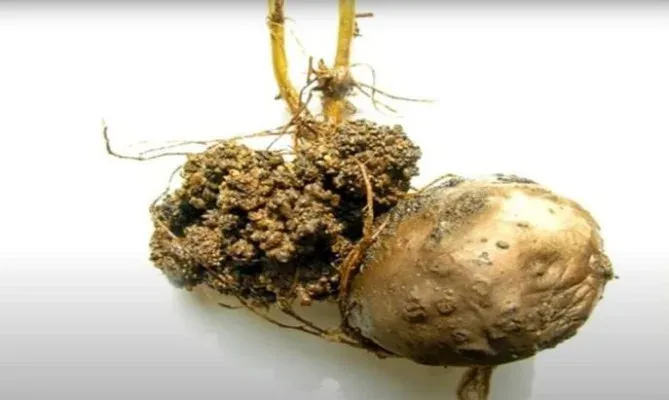
The most visible symptom is the development of irregular, cauliflower-like outgrowths on tubers, stolons, and stems near the soil surface.
Early-stage galls appear creamy or flesh-colored, but they progressively turn dark brown or black as they decompose due to secondary rot organisms.
Above-ground symptoms are often absent unless the infestation is severe, which can cause stunted growth and premature chlorosis of the haulms.
The internal tissue of the wart galls is densely packed with millions of resting spores, which are released into the soil as the gall disintegrates.
- Cauliflower-like galls on tubers.
- Deformed stolons and stems.
- Darkening and necrosis of galls.
- Complete destruction of tuber tissue.
Control measures
The most effective strategy is the use of resistant potato cultivars, which are bred to prevent the pathogen from completing its life cycle.
Implementing strict quarantine protocols, including the prohibition of moving soil or plant material from infested sites to uninfested fields.
Thorough cleaning of agricultural equipment and vehicles to prevent the mechanical dispersal of soil contaminated with resting sporangia.
Adopting long-term crop rotation schemes, avoiding solanaceous crops for many years to help reduce the population of resting spores in the soil.
If an outbreak is detected, site-specific management is required, including destroying infected plant material and treating the soil with fungicides.
Causes diseases · 1
Discussion
No discussions yet — be the first.