
Soil-borne cereal pathogens
Soil-borne cereal
Soil-borne cereal pathogens refer to a diverse group of fungi and fungus-like organisms that inhabit the soil and cause severe diseases in cereal crops. Primary pathogens include species from the genera Fusarium, Bipolaris, Gaeumannomyces, and Rhizoctonia.
What the section contains
Soil-borne cereal pathogens
These organisms are generally facultative parasites, meaning they can survive on decaying organic matter in the soil for extended periods while waiting for a suitable host. Their ability to persist in the soil makes them notoriously difficult to eradicate.
The infection cycle typically starts from infected seeds, crop residues left from the previous season, or movement of soil particles via farm machinery and water runoff. Complex survival structures, such as sclerotia or chlamydospores, allow them to endure harsh conditions.
The presence of these pathogens is often linked to long-term intensive cropping patterns, especially continuous monoculture of wheat or barley. Soil conditions like pH, moisture, and temperature significantly influence their activity and pathogenicity.
Detection is often difficult because the most significant damage occurs below the soil surface. Specialized diagnostic procedures, including PCR analysis or culturing on selective media, are often required to identify specific pathogens.
The primary damage is inflicted on the root system, crown, and lower stem of cereal plants. Common diseases such as take-all, common root rot, and Fusarium foot rot are direct results of these pathogens compromising plant vascular integrity.
Damage to the root system inhibits the plant's ability to uptake vital water and nutrients from the soil. This leads to reduced seedling vigor, stunted growth, and uneven maturation across the field, drastically reducing the final yield potential.
Severe infections can cause plant lodging or death before the heading stage, leading to patchiness and empty spots in the field. This loss of plant population density cannot be recovered later in the growing season.
Economic losses arise not only from reduced grain yield but also from lower quality due to the accumulation of mycotoxins in the grain. Mycotoxins produced by Fusarium species pose significant health risks in both human and animal consumption.
In addition to yield and quality loss, the soil quality itself is degraded over time as the pathogen load increases, creating a long-term liability for future cropping cycles on the same land.
The activity of these pathogens typically begins immediately following planting. Moist and cool soil conditions are often preferred by many root pathogens, especially during the early stages of seed germination and seedling emergence.
For winter cereals, the autumn period is a critical window for infection, as the young, developing roots are highly susceptible to colonization. The pathogen establishes itself in the crown tissue before the onset of winter dormancy.
Springtime marks a phase of renewed activity as temperatures rise and the plants enter rapid growth stages. The stress associated with rapid development often coincides with the progression of root necrosis if the infection has already been established.
Development continues throughout the tillering and stem elongation phases. If environmental conditions remain favorable, such as high humidity and frequent rainfall, the progression of the disease can lead to widespread damage.
The cycle concludes as the plant reaches maturity and the pathogen produces resting structures that remain in the soil. These spores serve as the primary inoculum for the next crop cycle, perpetuating the disease in the field.
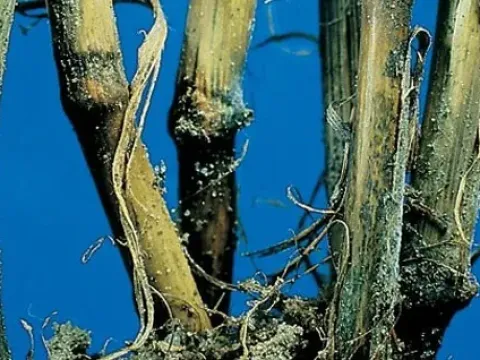
Symptoms often manifest as necrotic, dark-colored lesions on the coleoptile and the crown of the plant. As the disease progresses, the roots become brittle, dark, and may eventually disintegrate entirely.
Above-ground signs include chlorosis (yellowing) of lower leaves, overall stunting, and premature wilting during hot, dry days. Affected plants often exhibit a lack of vigor and show a reduced number of productive tillers.
- Dark, brownish discoloration at the base of the stem.
- Disintegration of primary and secondary root systems.
- White, pink, or gray mycelial growth on the base of stems.
- "Whiteheads" – bleached, empty grain heads that appear prematurely.
- Localized patches of dead or stunted plants within the field.
In cases of Fusarium foot rot, a characteristic reddish-brown discoloration of the stem base is frequently observed. With Take-all disease, the roots may appear blackened and stunted, often referred to as "black root rot."
The most effective strategy for managing soil-borne pathogens is the use of high-quality, fungicide-treated seeds. This provides a crucial protective zone around the germinating seed and young root system during the most vulnerable period.
Implementing a diverse crop rotation is essential. Rotating cereals with broadleaf crops or non-host species disrupts the pathogen lifecycle and helps to reduce the inoculum levels in the soil over time.
Effective stubble management is key. Tillage practices that accelerate the decomposition of crop residues help to reduce the survival sites for pathogens. Improving soil structure and drainage also mitigates the risks associated with certain root-rotting fungi.
Balanced crop nutrition, particularly adequate phosphorus and potassium levels, supports root health and increases the plant's natural resilience to minor infections. Avoiding excess nitrogen can also limit the development of certain foot rot diseases.
Biological control methods, such as applying beneficial microbes like Trichoderma species, are gaining traction. These organisms act as antagonists to harmful pathogens, creating a competitive environment in the rhizosphere that suppresses fungal growth.