
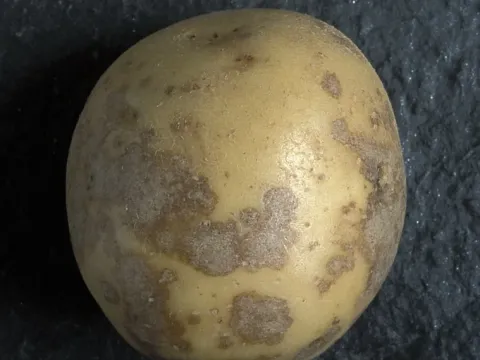
Silver scurf
Helminthosporium solani
Silver scurf is caused by the fungus Helminthosporium solani, which belongs to the Deuteromycetes (fungi imperfecti). This pathogen is highly specialized and attacks only potato tubers.
What the section contains
Silver scurf
The fungus survives as mycelium and conidia in the soil, on crop residues, and within storage facilities on walls and equipment. It can remain viable for several years in the absence of a host.
Pathogen development is highly dependent on environmental conditions, thriving at temperatures between 3°C and 25°C. High humidity levels above 90% are necessary for the infection process.
Conidia are dispersed through wind currents within storage units or through physical contact during grading and sorting processes when healthy tubers touch infected ones.
In the field, infection occurs primarily during the tuber bulking stage, especially in fields with heavy, poorly drained soils that maintain high moisture around the developing tubers.
The primary economic impact of silver scurf is the degradation of tuber appearance. This makes affected batches unsuitable for premium markets, especially for washed potato segments.
The fungus disrupts the periderm of the tuber, leading to increased moisture loss through transpiration. This results in tuber shriveling and significant weight loss during prolonged storage.
Infected seed tubers pose a major risk as they introduce the pathogen directly into the field, potentially spreading the disease to the progeny and perpetuating the infection cycle.
While silver scurf does not cause soft rot directly, it creates entry points for secondary decay organisms, such as Erwinia species or Fusarium, which can destroy the entire stock.
The economic loss is exacerbated by the cost of sorting, grading, and potential downgrading of the quality of the harvested produce, reducing the net profitability of the potato crop.
Initial symptoms present as small, light-brown spots on the tuber skin. As the disease progresses, these spots expand, eventually taking on a distinct silvery or metallic appearance.
The silvery sheen is caused by the accumulation of air spaces between the periderm layers as the fungal hyphae degrade the skin cells, making the symptom easier to see on wet tubers.
Under magnification or in conditions of high humidity, the affected areas show a velvet-like appearance due to the formation of olive-black conidiophores of the fungus.
The edges of the infected spots often have a darker border, which helps distinguish silver scurf from other skin blemishes like common scab or black dot disease.
Severe infections eventually lead to extensive shriveling and skin flaking, which gives the tuber a dehydrated look while the internal flesh usually remains firm and undamaged.
Management begins with planting certified, disease-free seed tubers to ensure that the initial inoculum load in the field remains as low as possible for the current season.
Crop rotation practices should include at least a three to four-year break between potato crops to allow the fungal population in the soil to naturally decline over time.
Efficient management of storage conditions is critical; keeping the storage temperature low (2-4°C) and maintaining ventilation to prevent condensation reduces the fungus's reproductive rate.
- Sanitation of all storage equipment and containers using approved disinfectants prior to receiving the new harvest.
- Avoiding mechanical injury during harvest and handling, as wounds facilitate fungal penetration and secondary infection.
- Application of registered fungicidal treatments to tubers intended for storage or seed to protect the periderm from infection.
Regular inspection of stored potatoes is essential to detect early outbreaks. Rapid identification and isolation of affected batches can prevent the spread of spores to healthy potatoes.