
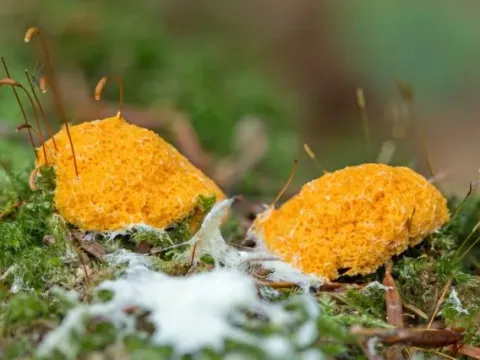
Slippers
Slippers
Slippers belong to the division Myxomycota, which are commonly referred to as slime molds. In agronomy, they represent a unique group of organisms that share characteristics with both fungi and protozoa.
What the section contains
Slippers
The life cycle of these organisms includes a plasmodium stage, which is a naked, multinucleate mass of protoplasm capable of movement across substrates.
They are not true parasitic fungi but act as opportunistic colonizers, often thriving on decaying organic matter and weakened plant tissues in moist environments.
Identification is based on the presence of slimy, gel-like coatings on the base of stems or soil surfaces, which distinguish them from typical mycelial fungal growth.
Unlike true fungi, myxomycetes lack a rigid cell wall during their vegetative state, making them highly susceptible to environmental changes that cause dehydration.
Slippers primarily impact vegetables, ornamentals, and low-growing crops that are exposed to excessively high soil moisture or poor drainage.
The pathogen colonizes the root collar and stems near the soil line, causing physiological stress and weakening the plant's natural defense systems.
The slime mass physically blocks gas exchange and nutrient uptake through the stem surface, leading to stunted growth and reduced vigor.
In greenhouse settings, these organisms can cause significant damage to young seedlings, leading to reduced stand density and economic losses.
Damaged tissue often becomes a site for secondary infection by bacteria and fungi, which can lead to complete plant decay and death.
Active development of myxomycetes occurs during periods of high humidity and rainfall, typical of summer conditions with frequent irrigation.
The temperature optimum for plasmodium growth ranges from 18 to 25 degrees Celsius, aligning with the peak growth season of most commercial crops.
Spore dissemination occurs primarily via water splashing or contaminated agricultural tools, which facilitates the rapid spread across the field.
In greenhouses, poor ventilation and high atmospheric humidity promote the formation of slime molds on substrates and plant parts.
During unfavorable conditions, plasmodia form dormant sporangia, which are resistant to harsh environments and serve as the primary source of overwintering.
The primary symptom is the appearance of a visible jelly-like coating with a white, gray, or yellowish color on the soil or stem base.
As the colonization progresses, the slime mass can spread, leading to tissue softening and a water-soaked appearance at the base of the plant.
Plants affected by these organisms show signs of stunted development, yellowing of lower leaves, and general lack of vitality due to nutrient disruption.
The slime has a distinct greasy texture when touched and dries into a thin, fragile crust, differentiating it from white mold or powdery mildew.
- Jelly-like slime on the plant stem.
- Tissue softening near the soil level.
- Yellowing and wilting of lower foliage.
- Significant growth retardation compared to healthy plants.
The most effective management strategy is improving field drainage to prevent water stagnation and maintain proper soil moisture levels.
Regular cultivation of the soil between rows promotes aeration and surface drying, which creates an unfavorable environment for slime mold survival.
In protected cultivation, strict humidity control and adequate ventilation are essential to prevent the condensation that favors their growth.
Chemical control involving copper-based fungicides can help manage the secondary infections that often accompany slime mold outbreaks.
Post-harvest sanitation, including the removal and destruction of crop debris, is critical to reducing the spore load in the soil for the next season.