
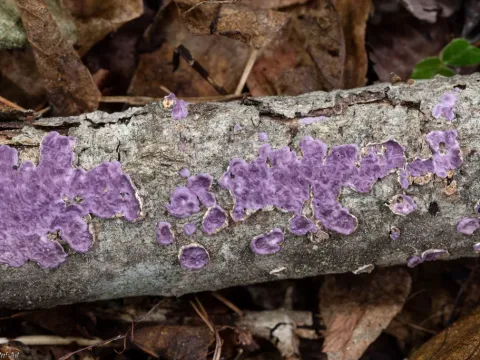
Silver leaf fungus
Stereum purpureum
Stereum purpureum is a basidiomycete fungus known as the causal agent of silver leaf disease. It is a wood-decay fungus that primarily thrives on dead or dying wood but acts as a parasite on live trees.
What the section contains
Silver leaf fungus
The fruiting bodies of the fungus are shelf-like or crusty structures that grow on the bark of infected trees. They have a grayish-brown upper surface and a vibrant purple or lilac undersurface.
The disease cycle begins when airborne spores enter the tree through open wounds caused by pruning, winter frost cracks, or mechanical damage. Once inside, the fungus colonizes the xylem.
As the mycelium spreads through the wood, it releases toxins that are transported to the leaves, interfering with the leaf structure and causing the characteristic silvering of the foliage.
Stereum purpureum is highly dependent on environmental moisture to release its spores, making autumn and spring the most critical periods for infection in fruit orchards.
The most susceptible hosts are members of the Rosaceae family, specifically plum, cherry, apricot, and apple trees. It can also affect various ornamental trees like poplars and willows.
The fungus causes severe internal decay of the wood, leading to structural instability and eventual branch or tree death. It effectively blocks the water and nutrient transport in the tree.
Infected trees suffer from reduced yields and poor fruit quality. Over time, the tree's health declines significantly, leading to stunted growth, reduced vigor, and increased susceptibility to other pathogens.
Young trees are often killed within a few years if the infection reaches the main trunk. For mature trees, the disease leads to a gradual loss of productivity and limb breakage.
Economic damage is substantial in commercial orchards, as the disease is often systemic and extremely difficult to eradicate once the pathogen has colonized the main scaffold branches.
The primary symptom is the silvering of leaves, caused by air spaces forming between the cuticle and the epidermis of the leaf, which gives it a metallic or silvery appearance.
As the disease progresses, the foliage may curl and wither. In severe cases, the whole tree or major branches may show these symptoms, indicating widespread systemic infection.
The cross-section of an infected branch reveals distinct dark brown staining in the heartwood. This discoloration is the result of the fungus breaking down the wood tissues.
Fruiting bodies of the fungus emerge on the bark after the branch or tree has died. These brackets are a clear diagnostic sign of the presence of the pathogen in the wood.
Trees affected by silver leaf often exhibit premature leaf drop and dieback of the crown, leading to a thin and sparse canopy compared to healthy specimens.
Prevention is the most effective management strategy. Avoid heavy pruning during wet weather, and always protect fresh wounds with protective sealants or fungicides to prevent spore entry.
Promptly identify and remove infected branches by cutting at least 15-20 cm below the visible stained wood. All infected material must be removed from the site and burned.
Maintaining tree health through proper fertilization and watering helps the tree develop its own natural defenses. Stressed trees are much more vulnerable to fungal colonization.
Sterilize all pruning tools with a bleach solution or rubbing alcohol between cuts to prevent spreading the spores from infected trees to healthy ones.
- Choose resistant varieties when planting new fruit trees to minimize future risks.
- Avoid leaving stumps or dead branches that can serve as a reservoir for fungal spores.
- Inspect orchards regularly during the growing season to spot early symptoms before the fungus spreads.