
Smut fungi
Hot
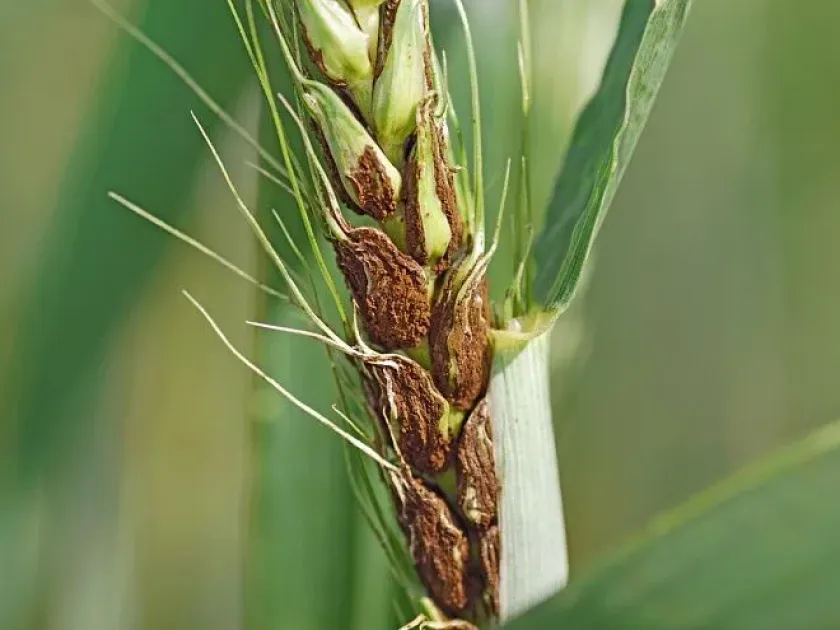
Description
How to identify
Smut fungi (Ustilaginomycetes) comprise a large class of basidiomycete fungi with over 1,000 known species. These are highly specialized obligate parasites that predominantly infect flowering plants, particularly within the Poaceae and Cyperaceae families.
The life cycle of these pathogens is complex and involves an alternation between diploid teliospores and haploid basidiospores. Infection usually occurs at the early stages of plant development when the fungus penetrates the meristematic tissues of the seedling.
Within the host plant, the fungal mycelium grows systemically, often remaining latent without causing visible symptoms until the plant enters the reproductive phase. During this time, the fungus becomes active and replaces plant tissues with its own spore mass.
The primary diagnostic sign is the transformation of the plant's reproductive organs into a black, dusty mass of teliospores that resembles soot or coal. This characteristic appearance is the basis for the common name "smut."
Systematically, these fungi belong to the phylum Basidiomycota. They are classified based on their infection type, distinguishing between those that cause localized infections and those capable of systemic invasion throughout the host plant.
What it damages
The main crops susceptible to smut infection include all common cereals: wheat, barley, oats, rye, millet, corn, and sorghum. Yield losses can range from 10% to over 50% in severe epiphytotic conditions, posing a significant threat to global food security.
Beyond the direct quantitative loss due to destroyed grains, the presence of spore masses significantly degrades the quality of the harvested grain. It develops a distinct, unpleasant odor and becomes unsuitable for consumption due to toxic degradation products.
Infected plants exhibit reduced photosynthetic efficiency, disrupted metabolism, and stunted growth. While affected plants may tiller excessively, they frequently fail to produce viable ears or grains.
Covered smut of wheat can completely devastate the interior of the grain, leaving only a shell filled with spores. This not only results in yield loss but also renders the harvested material useless as certified seed stock.
In intensive agriculture, smut remains a persistent risk factor. Infested fields act as primary inoculum sources for adjacent fields and future crop rotations, necessitating ongoing vigilance and rigorous management protocols.
When it appears
Loose smut infection typically occurs during the flowering period of cereals, when spores are carried by the wind and settle on the stigma. The fungus penetrates the developing embryo and remains dormant until the seeds germinate in the following season.
In contrast, covered smuts infect plants during germination in the soil. Spores present on the seed surface or in the soil germinate simultaneously with the seedling, allowing the fungus to invade the plant early.
Optimal conditions for infection include moderate air temperatures (15–20°C) and sufficient soil moisture during seed germination. While drought may inhibit soil-borne infections, it does not mitigate the risks associated with air-borne spore dispersal.
Visible symptoms typically manifest during the heading and flowering stages of the crop. This is also when the "spore shower" occurs, enabling the pathogen to spread to healthy plants or contaminate the soil for future years.
The duration of the incubation period varies depending on climatic factors and the specific biological characteristics of the smut species. High humidity during the crop's flowering phase often correlates with increased disease severity.
Signs of infestation
The most common symptom is the replacement of healthy grains with a dark mass of spores. In species like loose smut, the entire ear is often destroyed, leaving only a bare central rachis.
Covered smut often causes visible deformation of the ear, where glumes are pushed apart more than usual. The grain may appear externally intact, but the interior is completely replaced by a black powdery mass of spores.
In corn, the disease manifests as large galls—tumor-like swellings filled with spores. These can appear on leaves, stems, ears, and occasionally on roots, growing to significant sizes before rupturing.
Stem smut appears as long, lead-gray streaks along the stems and leaf sheaths, which eventually crack open to release spores. This causes the plant to twist and wither prematurely.
A distinct fishy odor (caused by trimethylamine) is a reliable indicator of smut presence in a field. Experienced agronomists often detect this smell during the ripening period when infestation levels are high.
Control measures
The primary method of control is the preventive treatment of seeds with systemic fungicides before sowing. This practice is essential to eradicate both externally borne spores and internal embryo-borne infections.
Crop rotation is a mandatory agronomic practice to break the pathogen's life cycle. Avoiding susceptible cereal crops on the same field for at least 2–3 years allows soil-borne spores to naturally lose viability.
Selecting and planting resistant cultivars and hybrids is the most cost-effective and environmentally friendly strategy. Modern breeding programs prioritize host resistance to the most prevalent smut races.
Optimizing planting dates is crucial to avoid environmental conditions that favor pathogen germination. Sowing into well-warmed soil ensures rapid emergence, reducing the window of vulnerability to soil-borne infection.
- Rigorous seed treatment protocols.
- Strict adherence to crop rotation schedules.
- Elimination of volunteer plants and weeds that host spores.
- Maintaining proper spatial isolation for seed production fields.
Causes diseases · 1
Discussion
No discussions yet — be the first.