
Sonchus yellow net virus
Sonchus yellow
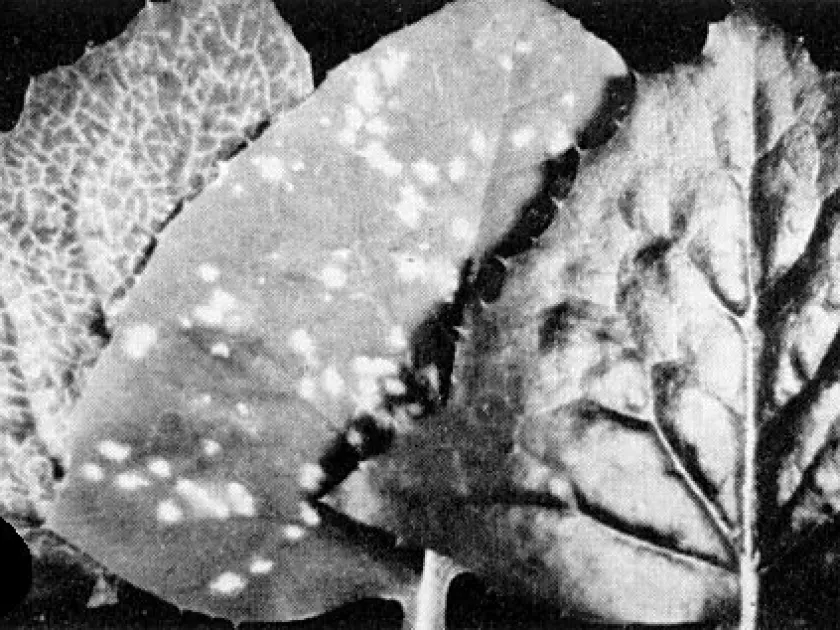
Description
How to identify
Sonchus yellow net virus (SYNV) is a plant pathogen belonging to the family Rhabdoviridae and the genus Nucleorhabdovirus. It is a single-stranded RNA virus known for its impact on diverse dicotyledonous plants.
The virus is characterized by bacilliform particles that replicate within the nucleus of infected plant cells. Its life cycle involves specific plant-infecting behaviors that lead to systemic spread throughout the host.
SYNV is an arbovirus, meaning it can replicate in both its plant host and its insect vector, typically aphids. This dual-host life cycle is a hallmark of the genus Nucleorhabdovirus.
Identifying this virus often requires laboratory confirmation, as field symptoms can be confused with nutritional deficiencies, such as magnesium or nitrogen deficiency, or other viral diseases.
Molecular diagnostic techniques, such as RT-PCR and serological assays, are the gold standard for accurately detecting SYNV in agricultural samples and monitoring its distribution.
What it damages
While the virus was named after the common weed sowthistle (Sonchus), it poses a significant threat to various economically important crops, including tomatoes, potatoes, and lettuce.
Infection results in systemic symptoms that severely impair the plant's physiological functions, leading to reduced photosynthesis and inhibited nutrient uptake.
The economic impact is primarily driven by stunted growth and reduced yields. Infected plants often produce fewer fruits, and the fruit that does develop is frequently of poor quality.
Besides immediate yield loss, the infection weakens the plant's overall vigor, making it more susceptible to other biotic stresses, such as fungal pathogens and environmental challenges.
Epidemics of SYNV can occur in areas where susceptible weed reservoirs and large populations of aphid vectors coexist, leading to widespread field damage if left unmanaged.
Signs of infestation
The primary symptom is leaf yellowing, often manifesting as interveinal chlorosis, where the tissue between the veins turns yellow while the veins themselves may remain green.
Plants infected with SYNV typically display signs of stunting and malformation. Leaves may become curled, wavy, or irregularly shaped, reflecting the disruption of normal growth patterns.
In severe cases, the plant's overall development is halted, leading to a dwarf appearance compared to healthy plants in the same field. Floral development is also often inhibited.
Visible symptoms can also include localized necrotic spots on foliage, especially in later stages of the infection as the plant's systemic health degrades.
- Interveinal chlorosis (yellowing)
- Leaf curling and deformation
- Severe stunting or dwarfing
- Reduced flower and fruit production
- General chlorotic appearance of the canopy
Control measures
Effective management begins with controlling aphid populations. Using appropriate insecticides and scouting for vectors are critical steps in reducing the spread of the virus.
Sanitation is vital; removing weeds, particularly sowthistle (Sonchus) and other Asteraceae relatives, eliminates the primary reservoirs that harbor the virus during off-seasons.
Planting resistant or tolerant cultivars, if available, is the most sustainable approach to minimizing the impact of SYNV on commercial vegetable production.
Implementing spatial isolation between newly planted crops and areas with high weed density can significantly reduce the risk of early-season infection by migrating aphids.
Routine field monitoring and the prompt roguing (removal) of symptomatic plants can help prevent the focal spread of the virus to adjacent healthy crops.
Causes diseases · 1
Discussion
No discussions yet — be the first.