
Sorghum anthracnose
Colletotrichum sublineola
Sorghum anthracnose is a fungal disease caused by Colletotrichum sublineola, a member of the kingdom Fungi and the phylum Ascomycota.
What the section contains
Sorghum anthracnose
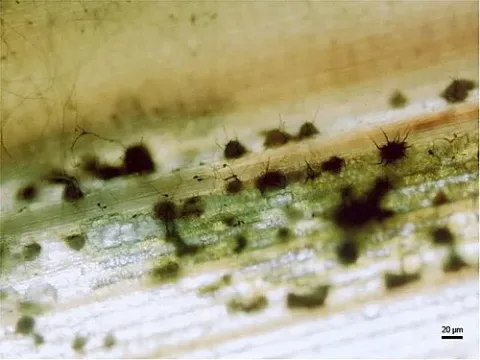
The fungus produces acervuli, which are specialized structures containing conidia (asexual spores) that act as the primary inocula for the disease spread.
Colletotrichum sublineola is highly diverse genetically, leading to the rapid emergence of new races that can overcome host resistance in different sorghum cultivars.
The pathogen can survive between growing seasons as mycelium or spores within crop residues, soil, and infested seeds, making initial field infection possible.
Diagnostic identification typically involves observing small black dots within necrotic lesions on the leaves, which represent the fruiting bodies of the fungus.
Anthracnose affects all types of sorghum, including grain sorghum, sweet sorghum, and forage species like Sudan grass, causing damage to all plant parts.
Leaf infection causes significant chlorosis and premature tissue death, which reduces the plant's photosynthetic capacity and leads to stunted growth.
Stem infection leads to rot within the internal tissues, weakening the stalk's structure and often resulting in lodging before the harvest season.
When the pathogen infects the panicle and grain, it results in low-quality seeds, reduced test weight, and poor germination rates for the following season.
Total yield losses can be substantial in susceptible varieties, potentially reducing grain and biomass production by over 50% under severe disease conditions.
The disease cycle is triggered during the growing season when temperatures and moisture levels are favorable for the germination of fungal spores.
Anthracnose thrives in warm, humid environments with optimal temperatures ranging between 20°C and 30°C, often occurring after periods of heavy rain or high humidity.
Rain splashes and high-velocity wind are primary mechanisms for dispersing spores from crop residues to the developing foliage of young plants.
Secondary infections occur continuously throughout the season as long as moisture persists, leading to rapid disease development within a field.
The disease is typically most severe during the later stages of crop development, as the plant becomes more susceptible to secondary spread.
The first symptoms appear as small, oval or spindle-shaped lesions on leaves, usually featuring a red, purple, or tan border and a lighter center.
As the infection progresses, black fruiting bodies (acervuli) emerge in the center of these lesions, making them appear dotted with small black spots.
Stem lesions are often sunken and may result in the internal tissue turning black, which compromises the nutrient transport and stalk stability.
Panicle infection is characterized by dark patches and poorly filled florets, sometimes leading to the complete failure of the grain to mature.
- Oval lesions with dark margins on leaves.
- Visible black acervuli in the center of spots.
- Premature yellowing and drying of leaves.
- Internal stem necrosis and lodging.
- Incomplete or shriveled grain development.
Planting resistant hybrids is the most effective and sustainable strategy to manage sorghum anthracnose and minimize potential economic losses.
Implementing a crop rotation system helps break the pathogen's life cycle, as it reduces the amount of viable inoculum remaining in the soil from previous seasons.
Effective management includes deep plowing or tillage to bury crop residues, which limits the fungus's ability to survive and produce spores.
Seed treatment with fungicides is essential to prevent early-season infection and ensure strong, healthy seedling establishment in the field.
Foliar application of fungicides during the growing season can suppress disease progress, particularly in fields with high moisture levels or historical outbreaks.