
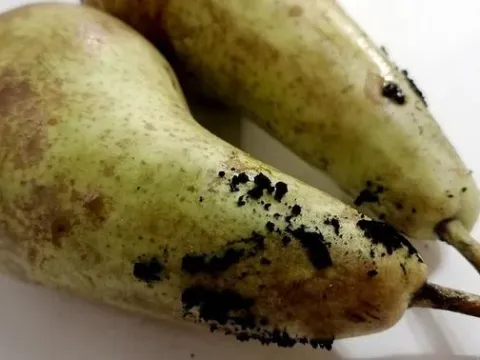
Sooty mold
Capnodium citri
Sooty mold (Capnodium citri) is a type of ascomycete fungus that thrives on the surface of plants. It is considered an epiphyte, meaning it grows on the outside of plant parts rather than invading their internal tissues.
What the section contains
Sooty mold
The fungus manifests as a dark, soot-like mycelium that covers leaves, fruits, and branches, giving the plant a scorched or dirty appearance.
This pathogen does not feed on the plant itself but relies entirely on "honeydew," a sugary substance secreted by sap-sucking insects like aphids, whiteflies, and scale insects.
The presence of sooty mold is a clear indicator that the plant is infested with insects, making it a secondary symptom rather than the primary cause of plant decline.
The fungus spreads easily via airborne spores, colonizing new areas rapidly whenever the combination of moisture and insect-derived sugar is available.
The primary damage caused by sooty mold is the obstruction of photosynthesis. By forming a dense black layer on the leaves, the fungus blocks sunlight from reaching the chlorophyll.
This light deprivation leads to a decline in the plant's health, resulting in stunted growth, leaf yellowing, and potential premature leaf drop due to metabolic stress.
Fruit quality is significantly impacted, as the black coating reduces the aesthetic value and can hinder the fruit's ability to develop its full size and flavor.
Persistent infestations weaken the plant's natural defenses, making it more susceptible to other secondary infections and environmental stresses.
In professional agriculture, especially in citrus orchards, sooty mold can cause substantial economic losses by reducing the quality and marketability of the harvest.
Sooty mold appears during the active growing season, coinciding with the peak populations of sap-sucking insects, typically from late spring through summer.
High humidity, frequent rain, and warm temperatures create the perfect environment for the fungus to expand its mycelial network across the plant canopy.
In protected greenhouse environments, sooty mold can be a year-round issue if insect populations are not kept under strict control.
Stagnant air and crowded planting conditions promote the development of the fungus, as these factors maintain the moisture levels that the spores need to germinate.
The disease cycle is continuous as long as the insect hosts are present, but development usually slows down during cooler autumn months as insect activity wanes.
The most recognizable sign of sooty mold is the appearance of a sticky substance on leaves, followed shortly by a black, powdery or velvet-like coating.
This coating usually starts as small spots near the veins of leaves and can spread to cover the entire leaf surface, including the stems and fruit.
Affected plants look visibly dirty or dusty. When rubbed, the fungus often detaches from the surface, showing that it is indeed an external growth.
The proximity of scale insects, aphids, or whiteflies on the undersides of leaves or on twigs is a diagnostic sign often associated with sooty mold infection.
- Black, sooty-looking leaf coating.
- Sticky residue (honeydew) on foliage.
- Stunted shoot growth.
- Visible colonies of aphids or scale insects.
- Premature yellowing of leaves.
The most effective strategy to manage sooty mold is to eliminate the primary cause: the insect infestation. Controlling aphids and scale insects will stop the production of honeydew.
Cultural practices are essential, including pruning branches to improve air circulation and sunlight penetration, which helps dry out the foliage and limit fungal growth.
For minor infestations, the fungal coating can be manually removed by washing the affected leaves with a mild soapy solution and a soft cloth or sponge.
In cases of severe infection, contact fungicides or copper-based sprays can be used to disinfect the leaf surface and inhibit the germination of new fungal spores.
Regular monitoring of plants for signs of early insect activity is the best preventive measure to stop sooty mold from taking hold in your garden or orchard.