
Soil-borne wheat mosaic virus
Wheat soil-borne
Soil-borne wheat mosaic virus (SBWMV) is a plant pathogenic virus belonging to the genus Furovirus within the Virgaviridae family. It is characterized by rod-shaped particles that persist in the soil for years inside the resting spores of its vector, the plasmodiophorid Polymyxa graminis.
What the section contains
Soil-borne wheat mosaic virus
The vector, Polymyxa graminis, is an obligate parasite of roots. The virus remains dormant within the cystosori of the fungus, allowing it to survive hostile environmental conditions until the next winter wheat season begins.
The virus primarily affects winter cereals, including wheat, barley, and rye. It is widely distributed across temperate regions where moist soil conditions prevail during the initial growth stages of winter crops.
Taxonomically, it is classified as a furovirus, a group known for being soil-transmitted. Unlike many other plant viruses, SBWMV cannot spread without its specific fungal vector, which makes the presence of the fungus a prerequisite for infection.
Detection is typically conducted via ELISA or RT-PCR, as visual symptoms are often confused with nutrient deficiencies, particularly nitrogen starvation, or other cereal viruses like Barley yellow dwarf virus.
The economic impact of SBWMV can be severe, causing significant yield losses in winter wheat. In heavily infested fields, yield reductions ranging from 20% to 50% are frequently reported, depending on the susceptibility of the cultivar and environmental conditions.
Infection results in physiological stress, causing inhibited root growth and reduced tiller production. The viral invasion disrupts the plant's metabolic functions, severely limiting its ability to store energy for grain development.
In addition to lower yields, the virus negatively impacts grain quality. Affected crops often show lower test weights, reduced protein content, and poor milling properties, making the grain less suitable for premium commercial use.
Plants severely weakened by the virus are also more susceptible to secondary stressors, such as root rot pathogens and drought, further exacerbating the cumulative damage to the crop stand.
The patchiness of the damage across fields also complicates farm management, leading to uneven maturation and harvesting challenges that increase costs and reduce overall field efficiency.
Symptoms typically appear in early spring, once the crops resume growth after the winter dormancy period. The disease is most active when soil temperatures range from 10°C to 15°C and moisture levels are high.
The infection process starts in the autumn when the roots of emerging seedlings come into contact with the zoosporangia of Polymyxa graminis. The virus is introduced into the plant tissue during this root colonization.
As ambient temperatures rise above 20°C in late spring, the appearance of visible symptoms often tapers off. Plants may appear to "recover," but the virus remains systemic within the host tissues, continuing to impact productivity.
Spread across fields occurs primarily through the physical movement of soil contaminated with the vector's resting spores. This can happen through farm machinery, floodwaters, or wind-blown dust during cultivation.
During the summer months, the virus enters a state of preservation within the durable resting spores of the fungal vector, remaining in the soil until the environmental cues for the next planting season arrive.
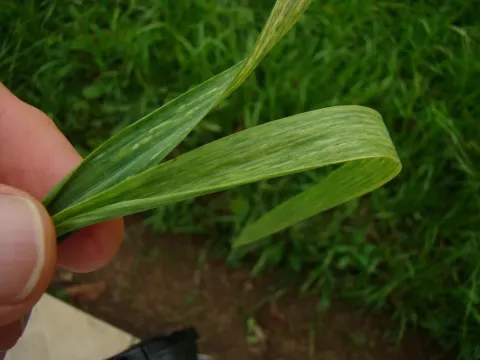
The most diagnostic sign is a distinct mosaic or mottled pattern on the leaves. This usually appears as light green to yellow streaks, stripes, or irregular spots that align parallel to the leaf veins.
Plants affected by the virus often show a pronounced stunted growth habit. The entire canopy may exhibit general yellowing, especially in low-lying or poorly drained areas of the field where the fungal vector thrives.
- significant stunting and reduced plant height;
- yellowing of leaf tissue (chlorosis) in mosaic patterns;
- curling or deformation of leaf blades;
- reduction in the number of fertile tillers;
- premature senescence of lower foliage.
In severe cases, plants may fail to reach the jointing stage. The affected fields often display a patchy distribution, with stunted, yellowed areas interspersed with relatively healthy-looking patches, creating a characteristically uneven crop appearance.
The most effective strategy for managing SBWMV is the use of resistant or tolerant wheat cultivars. Breeding programs have focused on incorporating genetic resistance into commercial varieties to mitigate the risk.
Implementing a robust crop rotation is essential. Rotating infested fields with non-host crops, such as soybeans or canola, for several years can significantly reduce the population of Polymyxa graminis spores in the soil.
Proper sanitation of farm equipment is crucial. Cleaning soil from machinery before moving between fields is a simple but vital step to prevent the introduction of the viral-carrying fungal spores to clean areas.
Improving soil drainage is a highly recommended practice. Reducing excessive moisture in the soil suppresses the activity of the fungal vector, thereby limiting the primary mechanism for virus transmission.
Delaying the planting date can also be an effective control method. Sowing later in the autumn, when soil temperatures are lower, can reduce the duration of time that the fungal vector is active, consequently lowering the infection rate.