
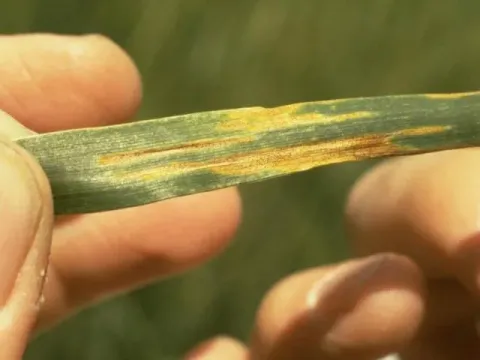
Septoria blotch of rye
Septoria secalis
The causative agent of Septoria blotch in rye is the fungus Septoria secalis, which belongs to the Ascomycota phylum. It is a specialized pathogen that primarily targets rye crops in temperate climates.
What the section contains
Septoria blotch of rye
The pathogen reproduces via conidia formed within small dark structures known as pycnidia, which are embedded in the necrotic leaf tissue of the host plant.
The fungus overwinters primarily in infected crop debris, including stubble and fallen leaves, where the mycelium and pycnidia remain dormant until favorable spring conditions arrive.
Dissemination of the pathogen occurs primarily through rain splashes and wind, which transport the spores from the lower canopy to the upper leaves of the developing rye plants.
Once a spore lands on a susceptible leaf surface, it germinates under high humidity, penetrating the tissue and establishing a feeding relationship that eventually causes chlorosis and necrosis.
The primary impact of Septoria blotch is the destruction of leaf tissue, which drastically reduces the photosynthetic capacity of the rye plant during critical growth stages.
Severe infestations during the flag leaf stage can lead to significant yield losses, as the plant cannot produce enough energy to fill the grains properly.
The disease contributes to stunted growth, reduced grain weight, and an overall decrease in the quality of the harvested crop, making it less suitable for milling.
If the infection reaches the stem, it can compromise the structural integrity of the plant, increasing the risk of lodging, which makes harvesting significantly more difficult.
In cases of heavy pressure, the entire canopy can wither, leading to thin and weakened stands that are highly susceptible to secondary pathogens and further stress.
The first signs of infection appear as small, light-brown or grayish spots on the lower leaves, often surrounded by a faint chlorotic halo.
As the infection spreads, these spots enlarge and become irregular in shape. The most reliable diagnostic feature is the presence of tiny, black pycnidia visible on the surface of the lesions.
Leaves affected by the disease tend to dry out and die from the tip downwards, severely limiting the amount of green tissue available for plant metabolism.
In humid conditions, the pathogen may spread to the leaf sheaths and the stems, leading to darker, more extensive necrosis that can cause early senescence.
When the ears are affected, the glumes show dark spots similar to those on the leaves, which can directly affect grain development and lead to shriveled kernels.
Integrated pest management is essential for controlling Septoria blotch, starting with rigorous crop rotation to break the cycle of infection by reducing pathogen buildup.
Deep tillage following harvest helps to bury infected crop residues, accelerating their decomposition and reducing the inoculum level for the following season.
The selection of rye cultivars with proven resistance to local strains of the fungus is the most sustainable and cost-effective management strategy.
- Maintaining optimal soil fertility to ensure the plant has the vigor to withstand fungal pressure.
- Effective management of volunteer rye plants that can serve as a bridge for the pathogen during the off-season.
- Application of systemic fungicides based on threshold levels and environmental risk factors during the flag leaf stage.
Regular scouting of fields for symptoms is vital; early detection allows for timely chemical intervention, which is far more effective than trying to manage a fully developed infection.