
Septoria leaf blotch
Septoria selenophomoides
The causative agent of the disease is the fungus Septoria selenophomoides, belonging to the kingdom Fungi, genus Septoria. This pathogen is a significant threat to cereal crops, particularly in regions with temperate climates.
What the section contains
Septoria leaf blotch
The biology of this fungus is centered around the formation of pycnidia, which are asexual fruiting bodies. These pycnidia develop within the host tissue and release conidia when humidity levels are sufficiently high.
Taxonomically, the fungus is an ascomycete. It survives between seasons on plant debris, utilizing it as a reservoir for primary infection in the following spring.
Microscopic examination of the pycnidia and their spores is the most reliable method for precise identification, as morphological features are critical for distinguishing it from other Septoria species.
The fungus thrives in cool, wet environments, which facilitate the rapid germination of conidia on the leaf surface and the subsequent colonization of the host plant tissues.
Septoria leaf blotch primarily affects wheat crops, though it can also impact other small grains. The pathogen attacks the foliage, leaf sheaths, and occasionally the spikes of the host plant.
The disease causes significant damage by reducing the total green leaf area available for photosynthesis. This reduction severely limits the plant's ability to produce the sugars required for grain filling.
Infected crops often exhibit stunted growth and reduced grain weight. Severe outbreaks can lead to yield losses exceeding 30-40%, especially if the flag leaf is compromised during the critical filling stage.
Furthermore, heavy infestation weakens the stem structures, increasing the risk of lodging. This mechanical damage not only reduces yield quality but also significantly complicates the harvesting process.
In addition to physical yield loss, infected seeds may have reduced germination rates, affecting the establishment and density of the crop stand in the subsequent growing season.
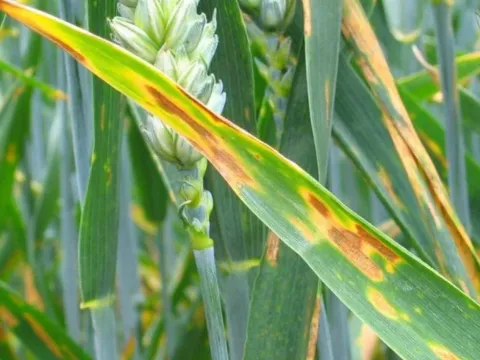
The first symptoms appear as small, chlorotic spots on the lower leaves that gradually expand and turn into brown, necrotic lesions. These spots are often irregular and limited by leaf veins.
A hallmark sign of the infection is the presence of pycnidia—small, black, pinhead-like structures embedded within the necrotic lesions. These are often visible to the naked eye or with a hand lens.
Under humid conditions, the lesions may coalesce, leading to rapid yellowing and death of the entire leaf. This progression typically moves from the lower canopy to the upper layers of the plant.
Stems and spikes can also show symptoms, manifesting as brown streaking or blotching. When the spikes are infected, the glumes may develop similar spots, potentially leading to shriveled grains.
The disease spread is rapid during periods of frequent rainfall, as splash dispersal of spores moves the pathogen from lower infected leaves to higher healthy tissues.
An effective control program for Septoria leaf blotch integrates genetic resistance, cultural practices, and chemical applications. Using resistant cultivars is the primary defense strategy.
Cultural methods are crucial for reducing the initial inoculum. These include deep plowing of crop residues to bury fungal spores and practicing diverse crop rotations to disrupt the pathogen life cycle.
- Application of fungicides at the tillering and flag leaf stages.
- Ensuring balanced fertilization to promote strong plant health and rapid canopy development.
- Timely removal of volunteer cereals that may harbor the fungus between seasons.
Fungicides from the triazole and strobilurin groups are commonly employed to control the disease. Applications should be timed based on environmental conditions and field monitoring results.
Integrated pest management (IPM) strategies help maintain the balance between economic viability and environmental responsibility, ensuring sustainable cereal production while managing disease pressure.