
Septobasidium bogoriense
Septobasidium bogoriense
Septobasidium bogoriense is a parasitic fungus belonging to the Septobasidiaceae family. It is best known for its unique symbiotic relationship with scale insects, which live under the protection of the fungal mycelial mats.
What the section contains
Septobasidium bogoriense
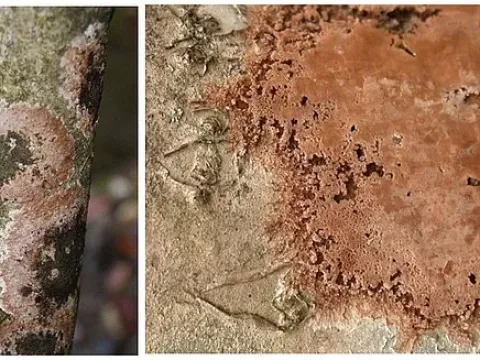
The fungus forms thick, leathery, and persistent crusts on the branches and trunks of host trees. These growths typically appear dark brown or grayish and are closely associated with colonies of insects that feed on the sap of the plant.
Biologically, the fungus functions by providing shelter for the insects from predators and environmental stress, while the insects provide the fungus with nutrients through their sugary excretions.
The pathogen is classified as a basidiomycete, and it reproduces by producing spores in a specialized layer called the hymenium on the surface of the crusts, which are then dispersed by wind and rain.
Identification is relatively straightforward due to the distinct appearance of the leathery mats and the visible holes on their surface that allow for the migration of scale insects to and from the bark.
The pathogen primarily affects perennial fruit trees, particularly citrus species, tea bushes, and various ornamental trees in tropical and subtropical regions.
Direct damage is caused by the physical covering of the bark, which interferes with gas exchange and the normal expansion of stems during growth, potentially leading to bark necrosis.
The secondary effect is even more damaging: the fungus facilitates the survival of scale insects, which significantly drain the plant of nutrients and cause further physiological decline.
Heavy infestations lead to the weakening of branches, increased susceptibility to secondary infections, and a noticeable reduction in crop yield and tree vigor.
Over time, untreated infections can cause extensive dieback of the crown, rendering the affected branches brittle and unproductive, eventually requiring severe pruning.
The primary symptom is the presence of hard, leather-like patches on the bark, which do not resemble typical lichens due to their association with insect activity.
If you peel back a small section of the fungus, you can often find live scale insects beneath it, which confirms the diagnosis of Septobasidium infection.
Affected branches often show discoloration and may have a patchy or uneven appearance. In severe cases, the bark beneath the fungus may appear cracked or swollen.
The leaves of heavily infested branches tend to turn yellow and drop prematurely, signaling that the tree's health is severely compromised by the combined impact of the fungus and the insects.
- Leathery, crust-like formations on stems and branches.
- Presence of scale insect colonies under the fungal layer.
- Yellowing of leaves and reduced foliage density.
- Bark cracks and necrotic areas under the growth.
The primary control strategy is the eradication of scale insects. By controlling the insect population, the symbiotic link is broken, and the fungus loses its nutritional source and protective host.
Effective management includes the application of dormant oil sprays, which suffocate the scale insects and can help to loosen or remove the fungal mats from the bark.
Pruning is essential for management; all heavily infested branches should be removed and destroyed immediately to prevent the spread of fungal spores to healthy parts of the orchard.
Improving air circulation through proper pruning techniques reduces the humidity levels within the canopy, creating an environment that is less favorable for spore germination and fungal growth.
Copper-based fungicides are recommended after pruning to protect the exposed bark tissue and to minimize the risk of new infections during the active growth season.