
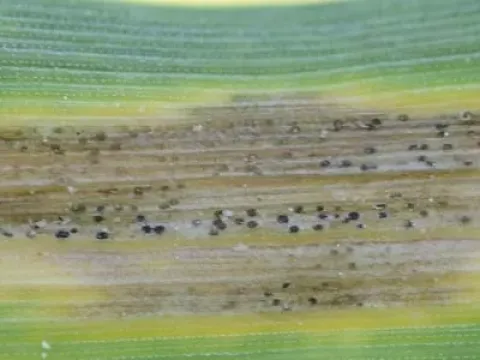
Septoria leaf blotch
Mycosphaerella graminicola
The causal agent of this disease is the fungus Mycosphaerella graminicola, which is better known in its asexual state as Zymoseptoria tritici. It is an Ascomycete fungus and the primary cause of Septoria leaf blotch, a major constraint on wheat production globally.
What the section contains
Septoria leaf blotch
The pathogen utilizes two types of spores for reproduction: asexual conidia, which are spread by rain splash, and sexual ascospores, which are wind-dispersed. This dual cycle allows the fungus to survive and proliferate effectively within cereal cropping systems.
The fungus predominantly attacks wheat (Triticum aestivum), causing severe damage to leaves, leaf sheaths, and sometimes heads. It is particularly devastating when it infects the flag leaf during the grain-filling stage of the plant.
Infection leads to significant yield losses by reducing the photosynthetic area, which limits the plant's ability to fill grains. High-yield varieties are often highly susceptible, making this pathogen a critical target for integrated pest management programs.
Infection begins in early spring when spores are splashed onto lower leaves from infected crop debris. The fungus thrives in cool, wet weather, with optimal temperatures for mycelial growth and spore production ranging between 15 °C and 20 °C.
The incubation period varies depending on weather conditions, usually taking 10 to 20 days. Repeated infection cycles can occur throughout the growing season if high humidity and rainfall persist, particularly from stem elongation through anthesis.
Symptoms initially appear as small, light-green spots on the lower leaves, which eventually expand into necrotic, irregular, or elongated lesions. These spots are often bounded by leaf veins, giving them a distinct rectangular or linear appearance.
A key diagnostic feature is the presence of pycnidia, which appear as tiny black, pepper-like dots embedded in the dead leaf tissue. As the disease advances, the lesions coalesce, causing the leaves to yellow, wither, and die prematurely.
- Cultivation of resistant wheat cultivars.
- Crop rotation to reduce primary inoculum levels.
- Deep plowing to bury crop residues.
- Timely application of systemic fungicides (triazoles, strobilurins).
- Effective monitoring and scouting during the flag leaf emergence.
Fungicide application is the primary method of control during the growing season. It is recommended to use products with high preventive efficacy before the pathogen colonizes the upper canopy, ensuring the flag leaf remains healthy during critical development phases.