
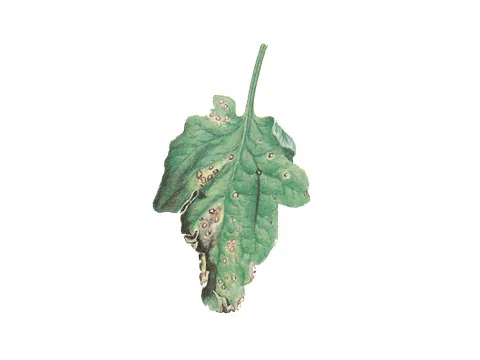
Septoria leaf spot
Septoria lycopersici
The causal agent of the disease is the fungus Septoria lycopersici, which is classified within the Coelomycetes group. It specifically targets Solanaceous crops, with tomatoes being the primary host.
What the section contains
Septoria leaf spot
The fungus reproduces through pycnidia—small flask-shaped fruiting bodies. These pycnidia contain numerous colorless, needle-shaped conidia that serve as the main source of disease spread.
This pathogen survives the winter in soil, on crop residues, and on weed hosts within the nightshade family. It thrives in high humidity and moderate temperatures.
Infection occurs when conidia are splashed onto leaves by rain or irrigation water. Once on the leaf, the spores germinate and enter the tissue through the stomata.
The pathogen is highly contagious and spreads rapidly under warm and wet conditions, making it one of the most common fungal problems for tomato growers worldwide.
Septoria leaf spot primarily attacks the foliage. The damage starts at the bottom of the plant and progressively moves upwards, causing significant leaf drop.
As the plant loses its leaves, the process of photosynthesis is severely hindered. This lack of energy production directly impacts the development of fruits.
Yield loss is significant, as plants become weakened and fruit size, flavor, and sugar content are reduced due to poor plant nutrition and stress.
Sunscald on the fruit is a secondary consequence of defoliation, as tomatoes are left exposed to direct sunlight without the protection of the leaf canopy.
In severe cases, the entire plant can become stunted, and the cumulative damage can reduce the overall yield by more than 50% in untreated fields.
The disease typically appears after the first fruit set, coinciding with warm temperatures and increased precipitation throughout the growing season.
Greenhouse tomatoes are particularly susceptible if relative humidity remains high and moisture accumulates on the leaves due to poor ventilation.
Splashing water is the primary vector for conidia distribution. Consequently, rainy periods or overhead irrigation systems greatly exacerbate the spread of the infection.
Late summer often sees the peak of the infection cycle as the cumulative mass of pycnidia on dead plant material increases the pressure on remaining plants.
Warm nights followed by heavy morning dew provide the perfect conditions for the fungus to complete its life cycle and produce successive generations of spores.
The first symptoms appear as small, circular, dark-brown spots on the lower leaves. These spots eventually expand and develop grey or white centers.
A hallmark sign of Septoria lycopersici is the presence of tiny, black, pepper-like dots inside the grey centers of the spots, which are the fungal pycnidia.
As the disease progresses, these spots merge together, causing the entire leaf to turn yellow, wither, and eventually fall off the stem prematurely.
While foliage is the main target, in rare cases, the infection can spread to stems and flower stalks, showing similar necrotic spots and pycnidia.
- Circular spots with dark borders.
- Distinctive black pepper-like pycnidia.
- Widespread yellowing and chlorosis of leaves.
- Premature defoliation starting from the base.
Crop rotation is essential. Avoid planting tomatoes or other nightshades in the same soil for at least three seasons to break the pathogen's life cycle.
Sanitation is key: remove and destroy all infected plant debris at the end of the season. Composting infected material is not recommended due to spore survival.
Improve air circulation by pruning lower leaves and maintaining proper spacing between plants. Avoid overhead irrigation and use drip irrigation to keep leaves dry.
Use fungicides containing copper, chlorothalonil, or mancozeb as preventative measures, especially during wet weather or if the disease is present in the area.
Select resistant or tolerant tomato varieties if available, and ensure that all seeds used are certified disease-free to prevent early introduction of the pathogen.