
Septoria leaf blotch
Sphaerella graminicola
Description
How to identify
Septoria leaf blotch is caused by the fungus Sphaerella graminicola, which is currently known in its asexual stage as Zymoseptoria tritici. It is a highly significant fungal pathogen that primarily impacts the leaves of wheat crops globally.
The life cycle involves both sexual (ascospores) and asexual (conidia) stages. The fungus overwinters on infected wheat stubble, serving as the primary inoculum source for the following season's growth.
What it damages
The disease causes significant damage by reducing the photosynthetic area of the wheat leaf, which is vital for grain filling. High levels of infection can cause grain shriveling and yield losses ranging from 20% to 50% in untreated crops.
Furthermore, the pathogen accelerates senescence of the canopy, leading to a shorter grain-filling period. This results in reduced test weight and significant quality degradation of the harvested grain.
When it appears
Infection is favored by cool to moderate temperatures and high moisture levels, such as frequent rainfall or prolonged leaf wetness. Spores are primarily dispersed by rain splash, meaning wet springs facilitate rapid disease spread.
The most critical window for infection is during the stem elongation and heading phases. If conditions remain wet during these stages, the infection moves rapidly from the lower canopy to the upper leaves, including the flag leaf.
Signs of infestation
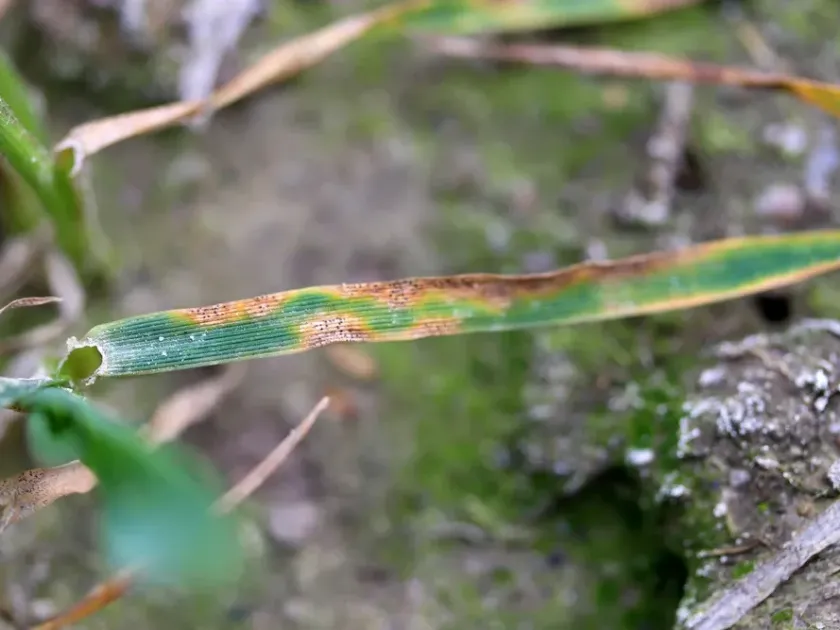
Symptoms initially appear as small, chlorotic spots that expand into elongated, necrotic lesions between the veins. Within these lesions, tiny black fruiting bodies called pycnidia develop, which are diagnostic indicators of the disease.
- Chlorotic or yellowing spots that turn into brown necrotic lesions.
- Lesions are often bounded by leaf veins, resulting in a rectangular appearance.
- Presence of black pycnidia scattered across the dead tissue.
- Progression of the blotch from the basal leaves upwards throughout the canopy.
Control measures
Effective control relies on integrated management, primarily utilizing fungicides such as triazoles, strobilurins, or SDHI-inhibitors. Applications should be timed strategically to protect the emerging flag leaf.
Cultural control measures involve crop rotation, removing volunteer wheat plants, and deep ploughing of infected stubble. Selecting resistant or tolerant wheat varieties remains the most cost-effective long-term strategy for disease prevention.
Causes diseases · 1
Discussion
No discussions yet — be the first.